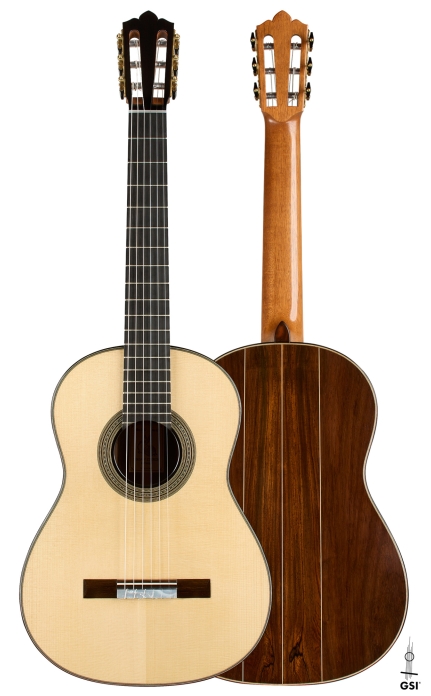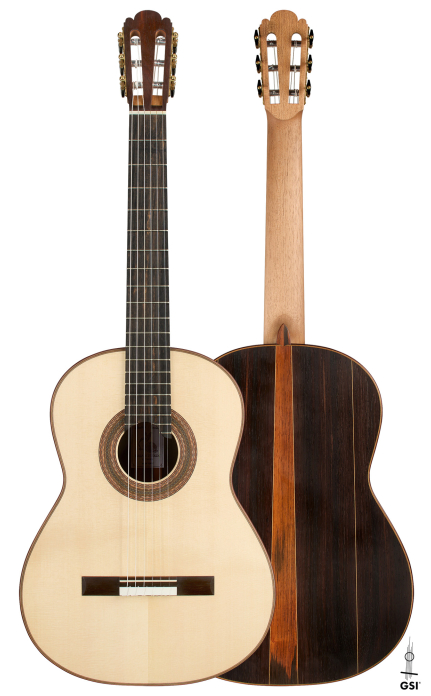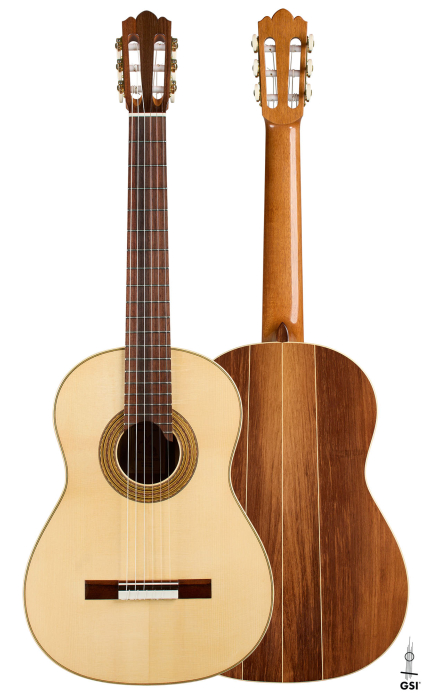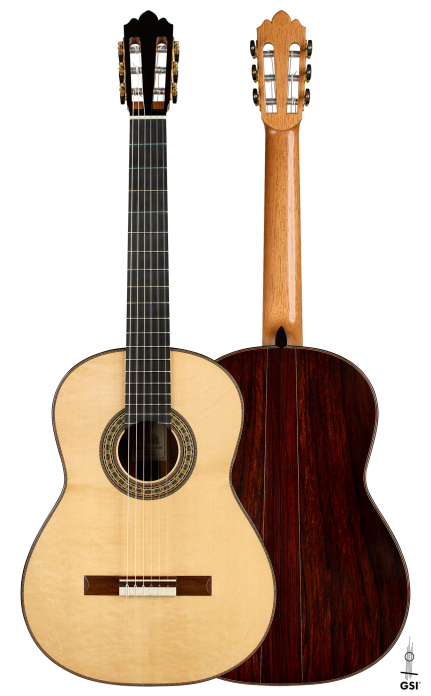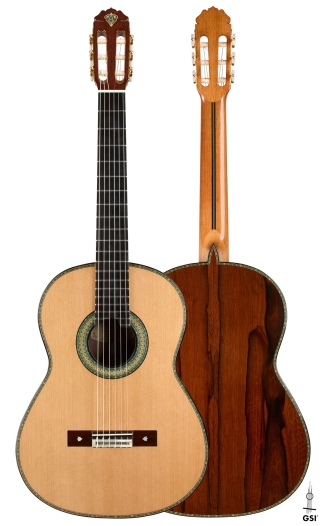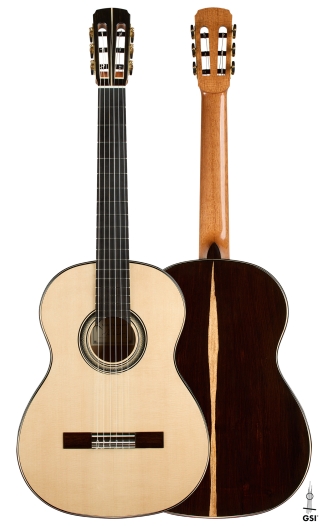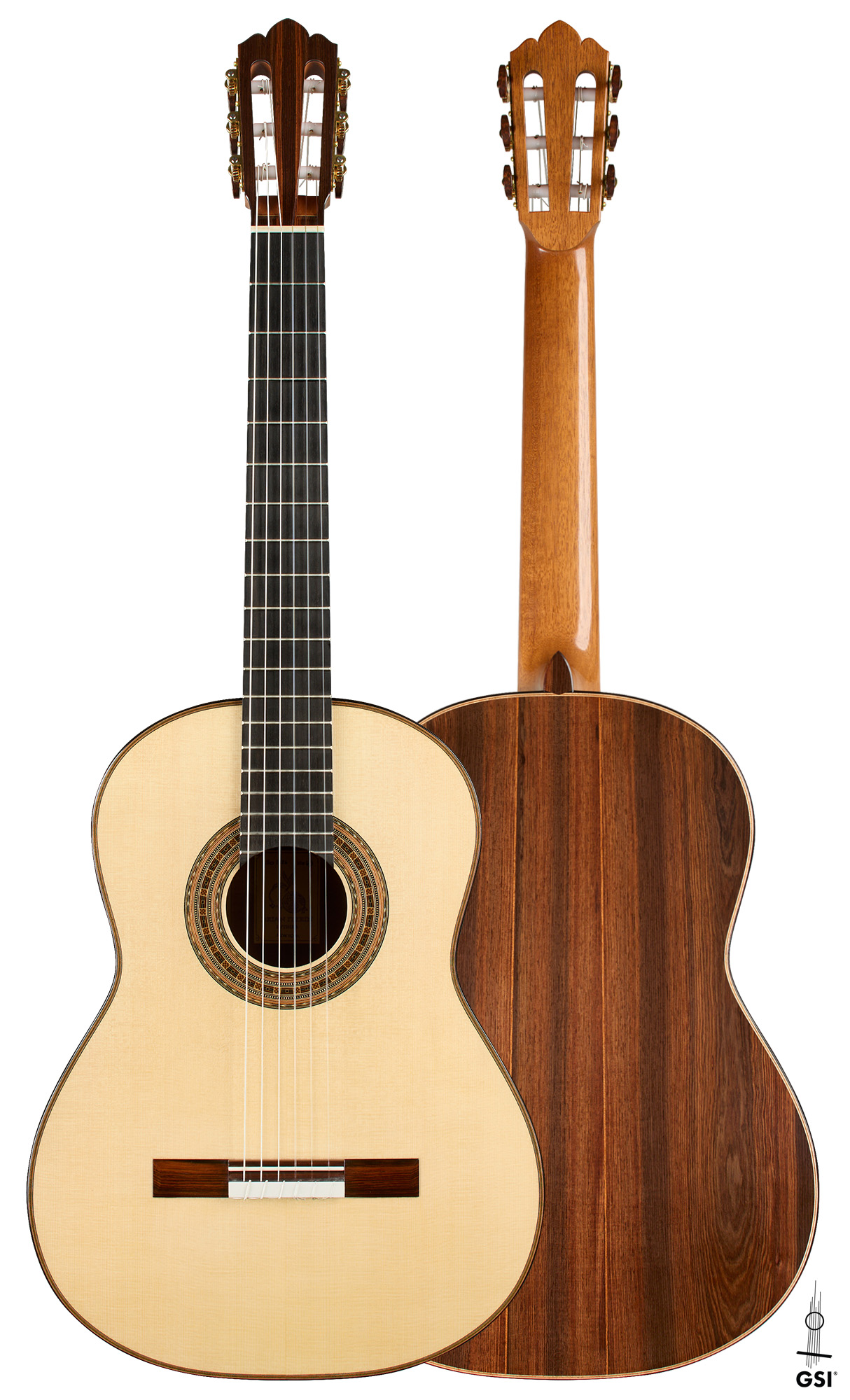
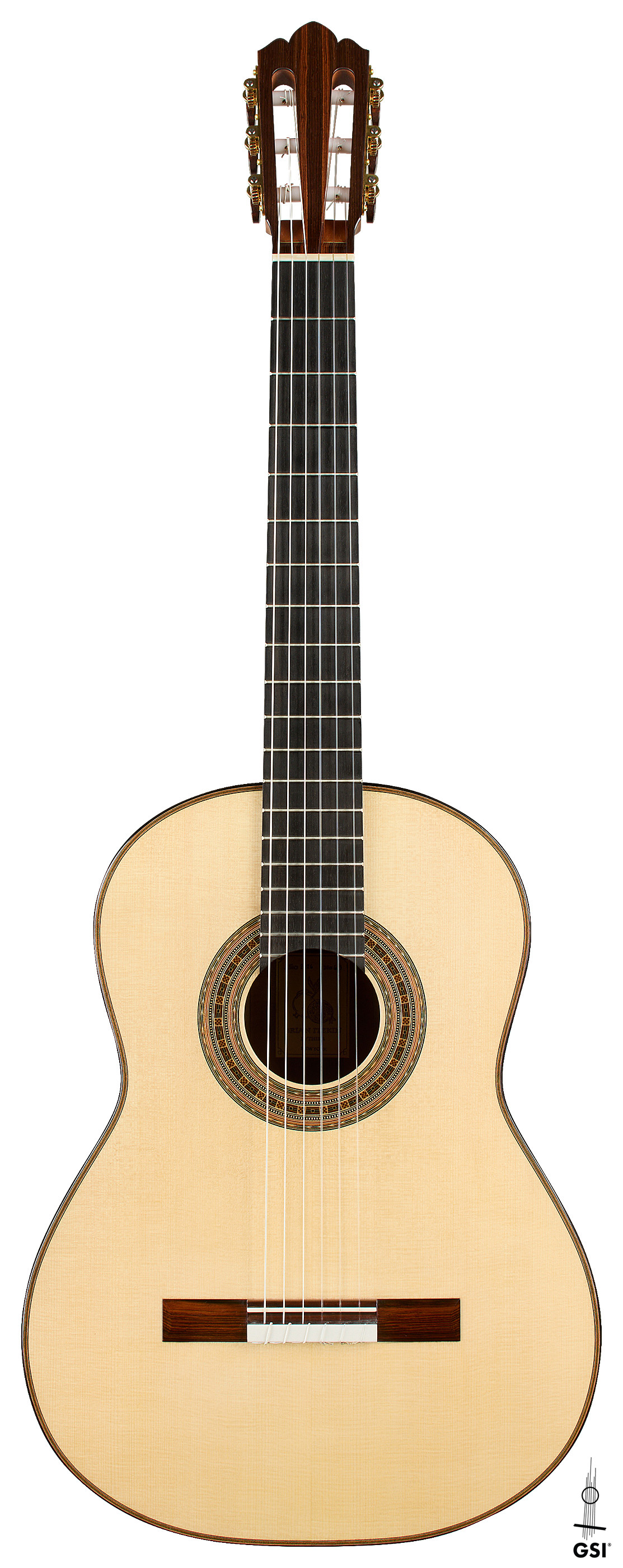
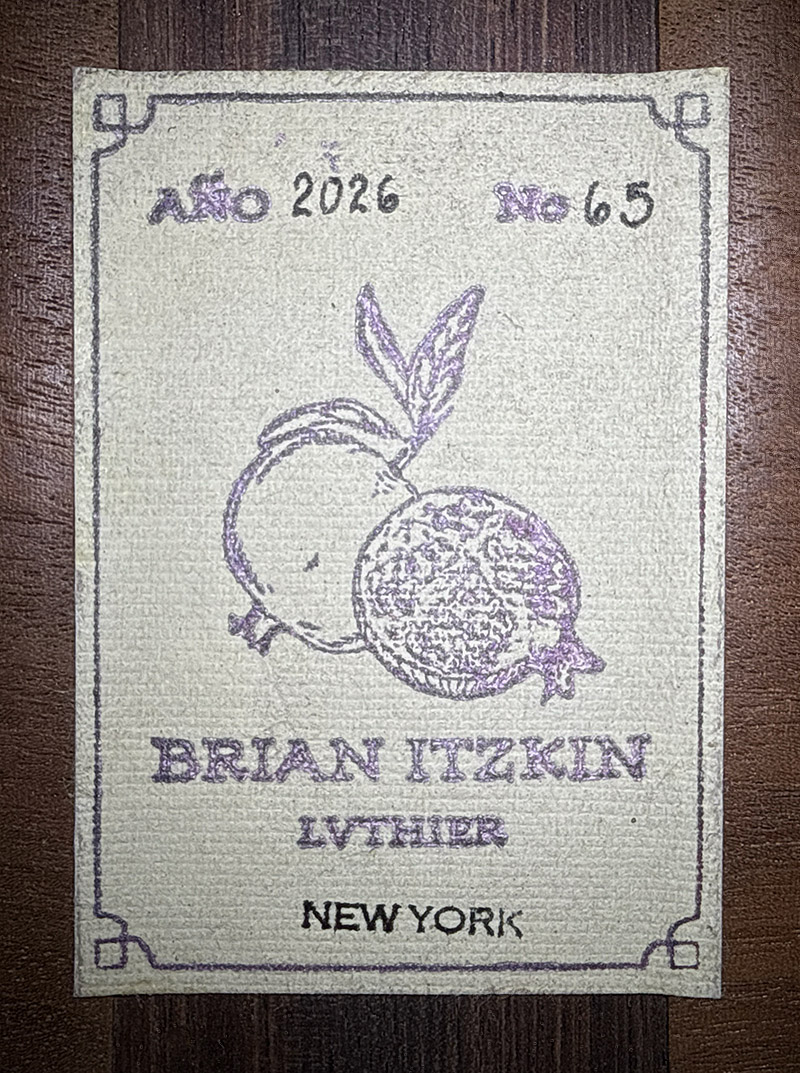
2026 Brian Itzkin No. 65 SP/AR
| Year | 2026 |
| Top | Spruce |
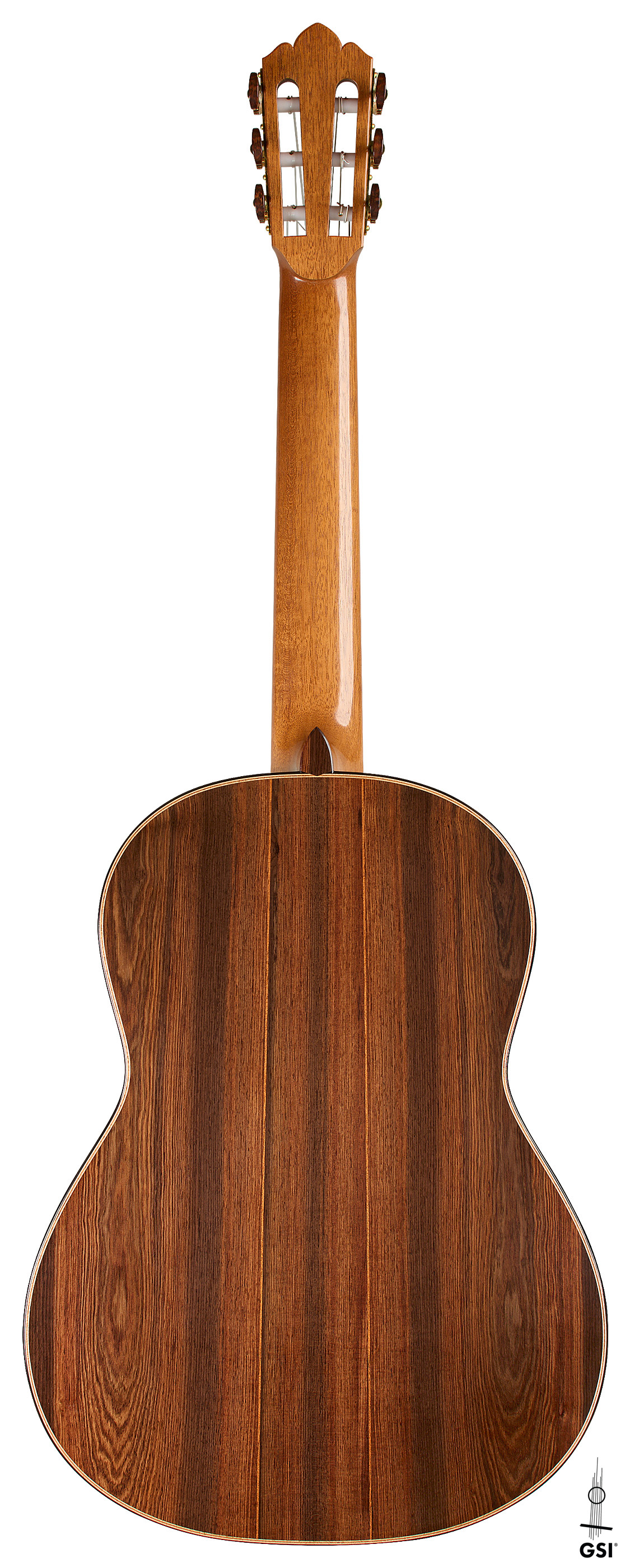
| Back & Sides | African Rosewood |
| Scale Length | 650 mm |
| Nut width | 52 mm |
| Finish | French Polish |
| Top Construction | Traditional |
| Bracing | Seven fans with bridge patch |
| Body resonance | F |
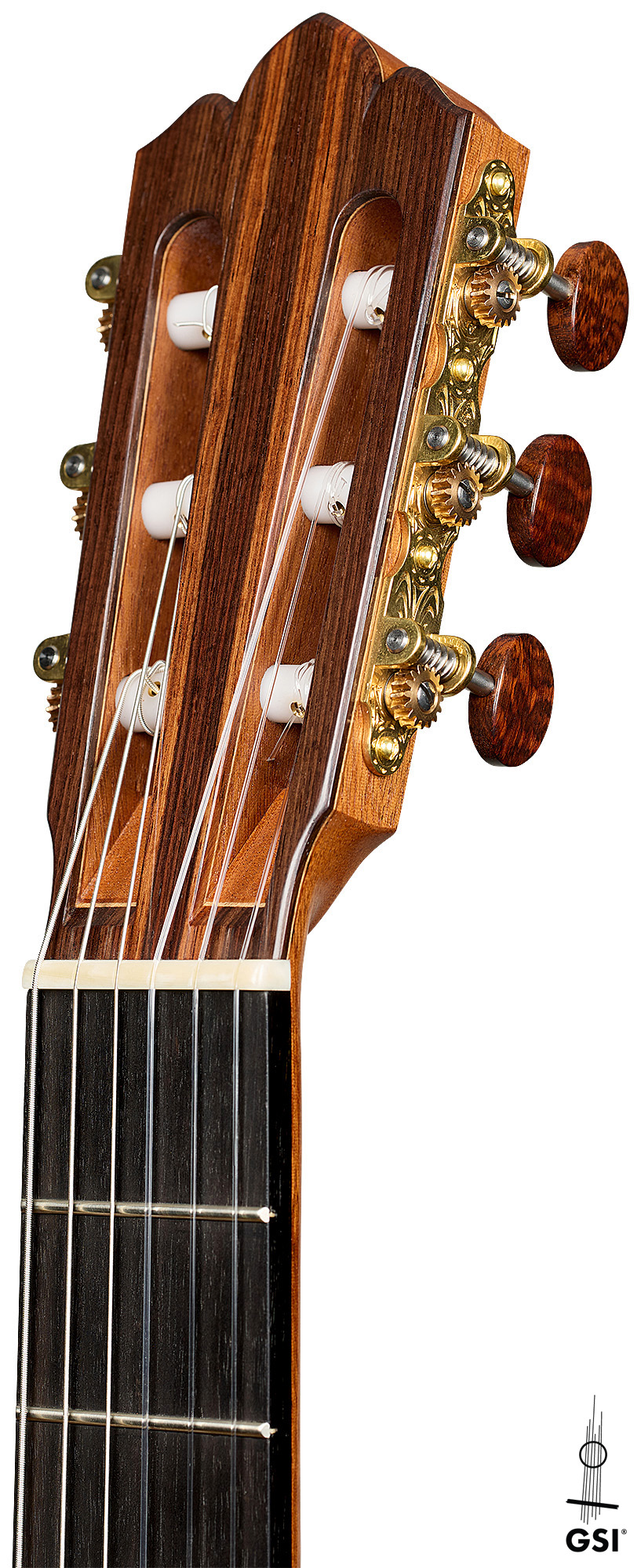
| Tuners | Sloane |
| Weight | 3.40lbs / 1542g |
| Condition | New |
| Country | USA |
| Case | Humicase Protege |
| Exchange | ExchangePlus |
| Luthier | Brian Itzkin |
$9,000.00
Applicable sales tax and shipping charges will be added at checkout.
Details
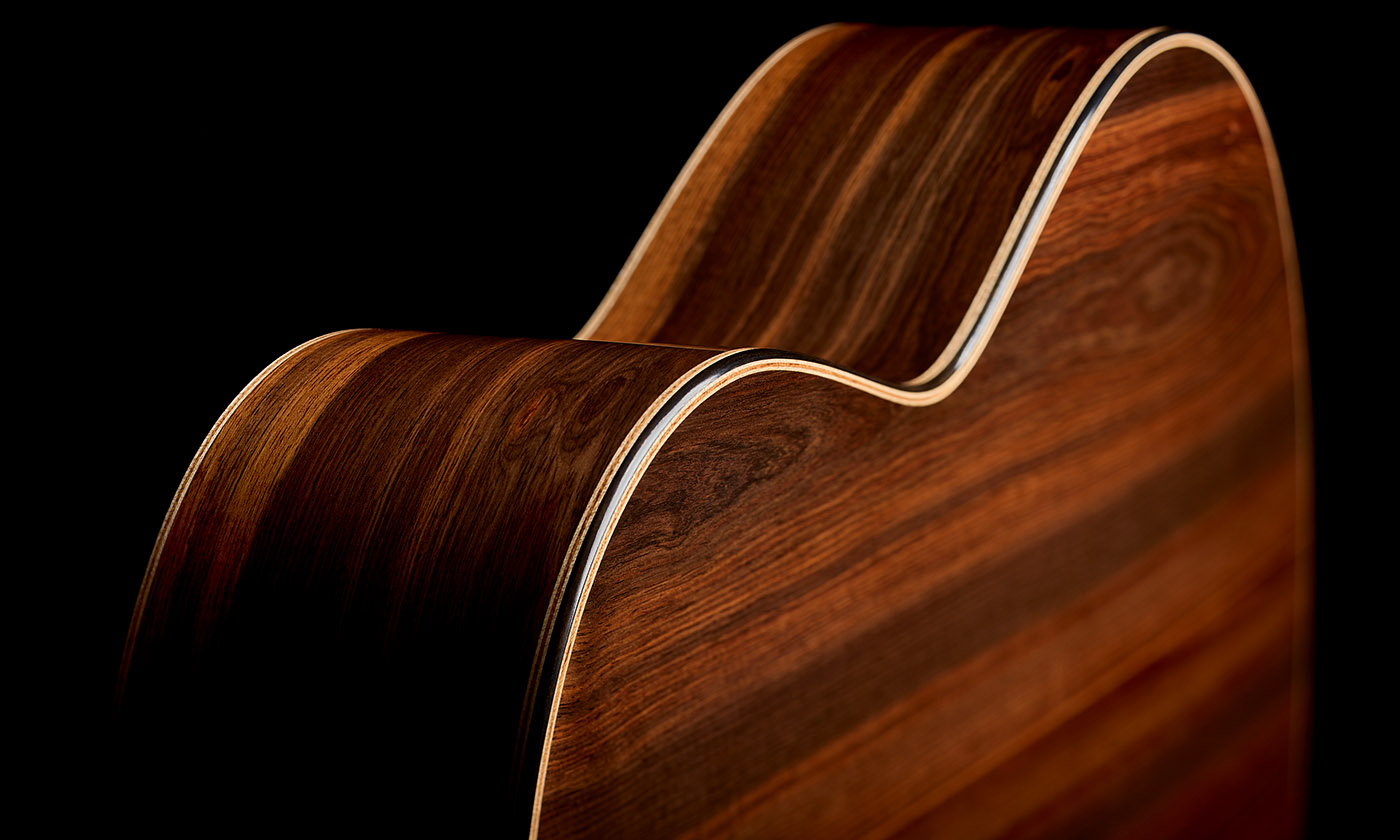

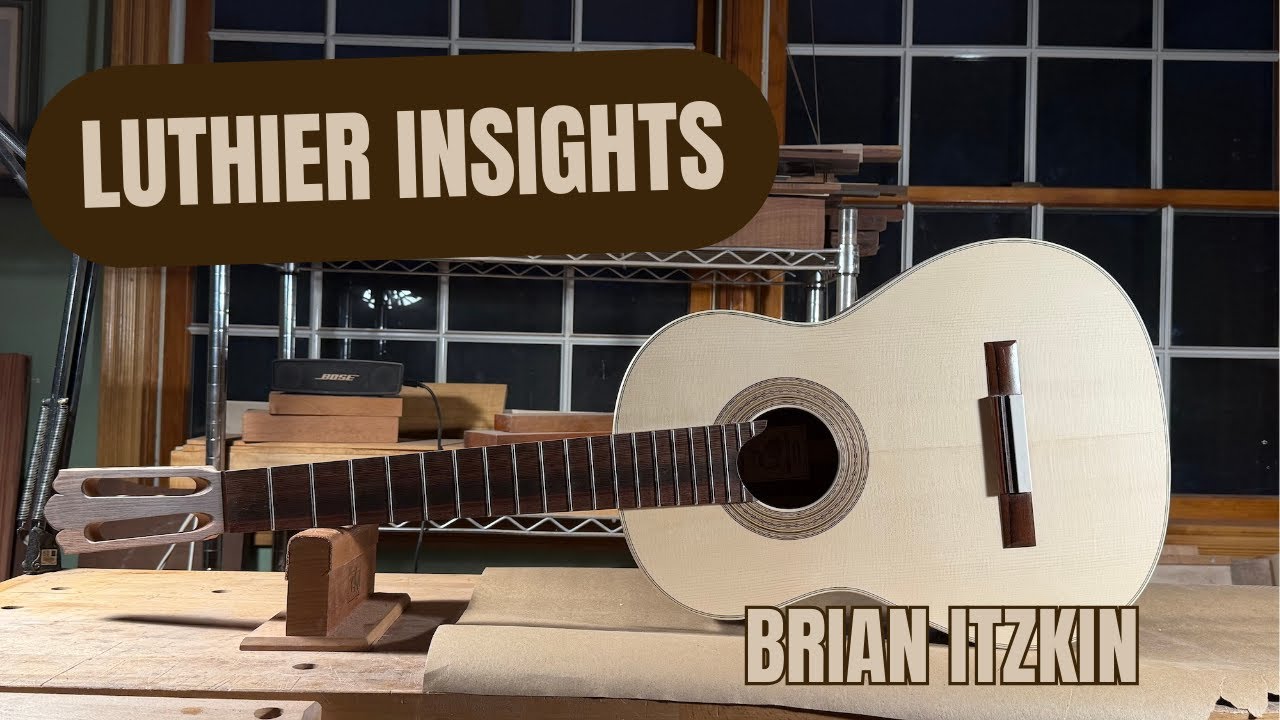
Luthier Insights: Brian Itzkin
Description
This 2026 Brian Itzkin No. 65 is a full-size classical guitar of Swiss spruce and African rosewood, made in New York – the fifth Itzkin to come to GSI, his only dealer in the USA.
Another Exceptional Guitar from Brian Itzkin
Here we have another exceptional guitar from Brian, whose work continues to impress us enormously. He is one of the most exciting up-and-coming builders we’ve encountered in recent years, and his instruments seem to embody so much of what we love about the great Spanish guitars of the past. His devotion to the traditions of Antonio de Torres and José Luis Romanillos is evident throughout his work, but what makes his guitars so special is that he has managed to capture the essence of these historical instruments while developing a very distinctive voice of his own. This latest guitar is another wonderful example, combining extraordinary materials, thoughtful construction and a sound that is remarkably mature for an instrument that is brand new.
Moon-Harvested Swiss Alpine Spruce
The materials are particularly noteworthy, beginning with a beautiful soundboard of Swiss Alpine spruce that was harvested according to the lunar cycle. This is a rather unusual practice, even among fine guitar makers, and involves carefully timing the felling of trees to coincide with particular phases of the moon. It is a level of selectivity that certain especially meticulous builders and wood suppliers pursue in their search for the finest possible soundboard materials. Brian acquired this old stock from American luthier Tom Rein shortly before his passing, giving the wood a meaningful personal history as well.
Dalbergia trichocarpa: A Rare African Rosewood
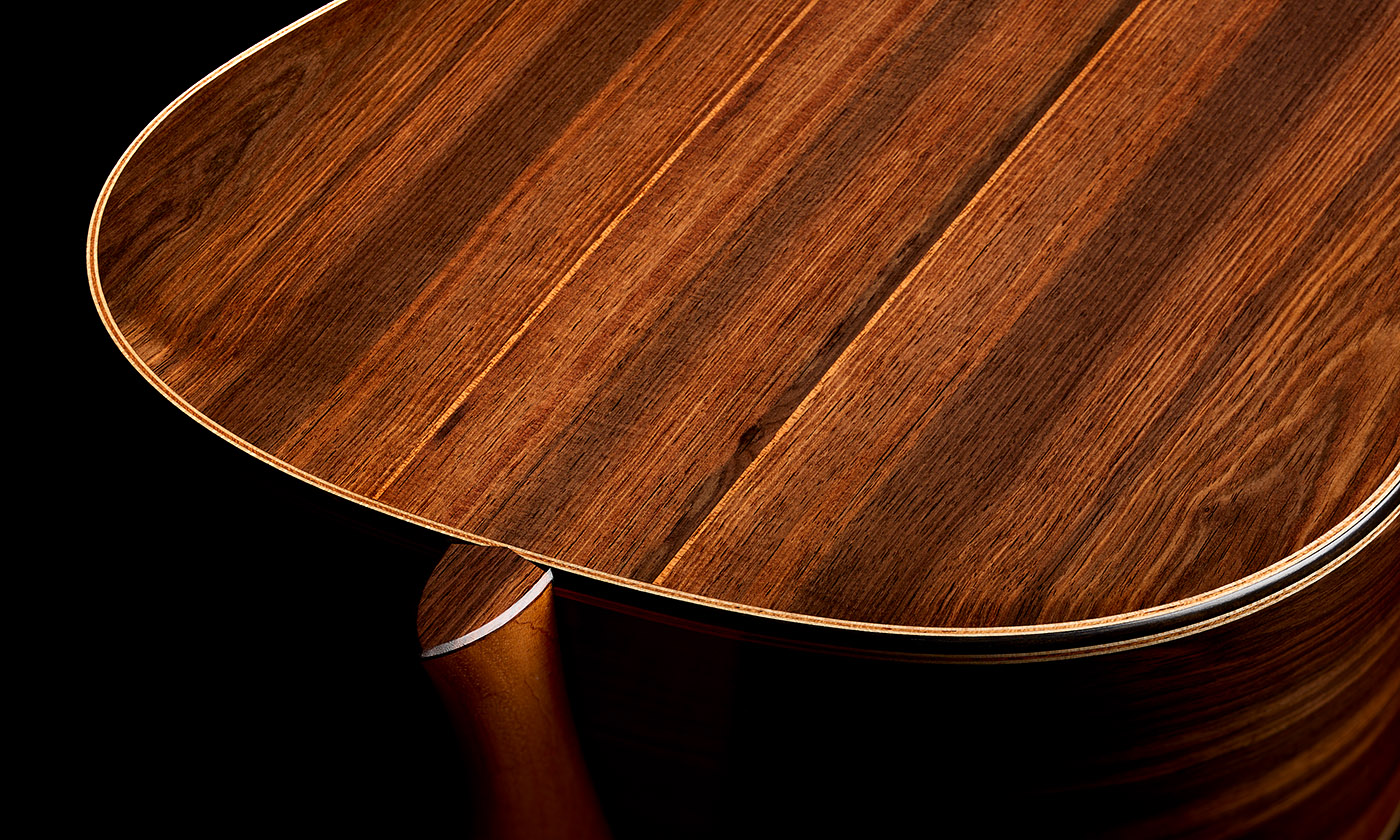
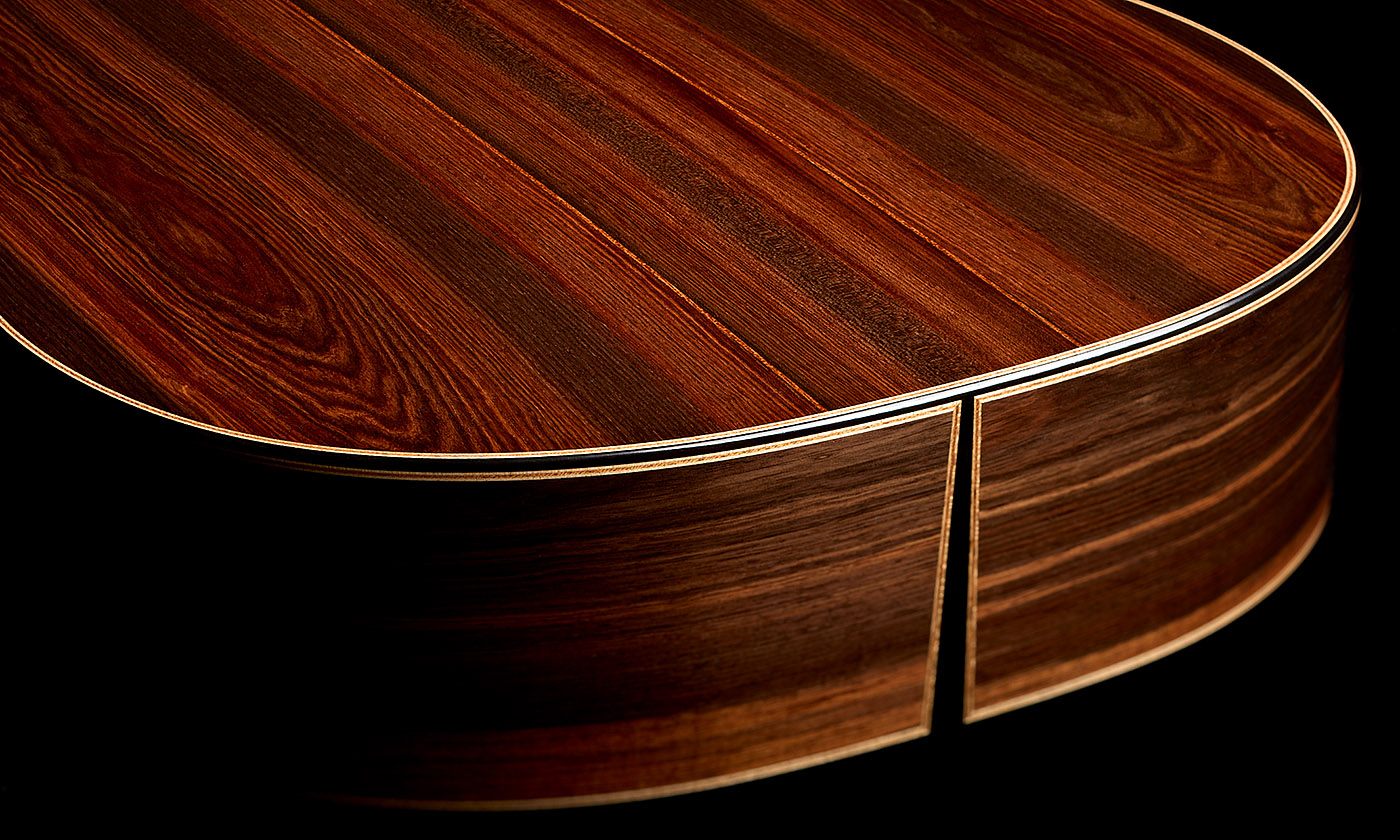
For the back and sides, Brian selected Dalbergia trichocarpa, a relatively obscure species of African rosewood that is considerably heavier and denser than most of the more familiar varieties. According to Brian, its physical properties are remarkably close to those of African blackwood. It is a fascinating material choice and another indication of his willingness to explore unusual woods in pursuit of his ideal instrument.
Romanillos-Style Bracing and a Rosette after Torres FE-17
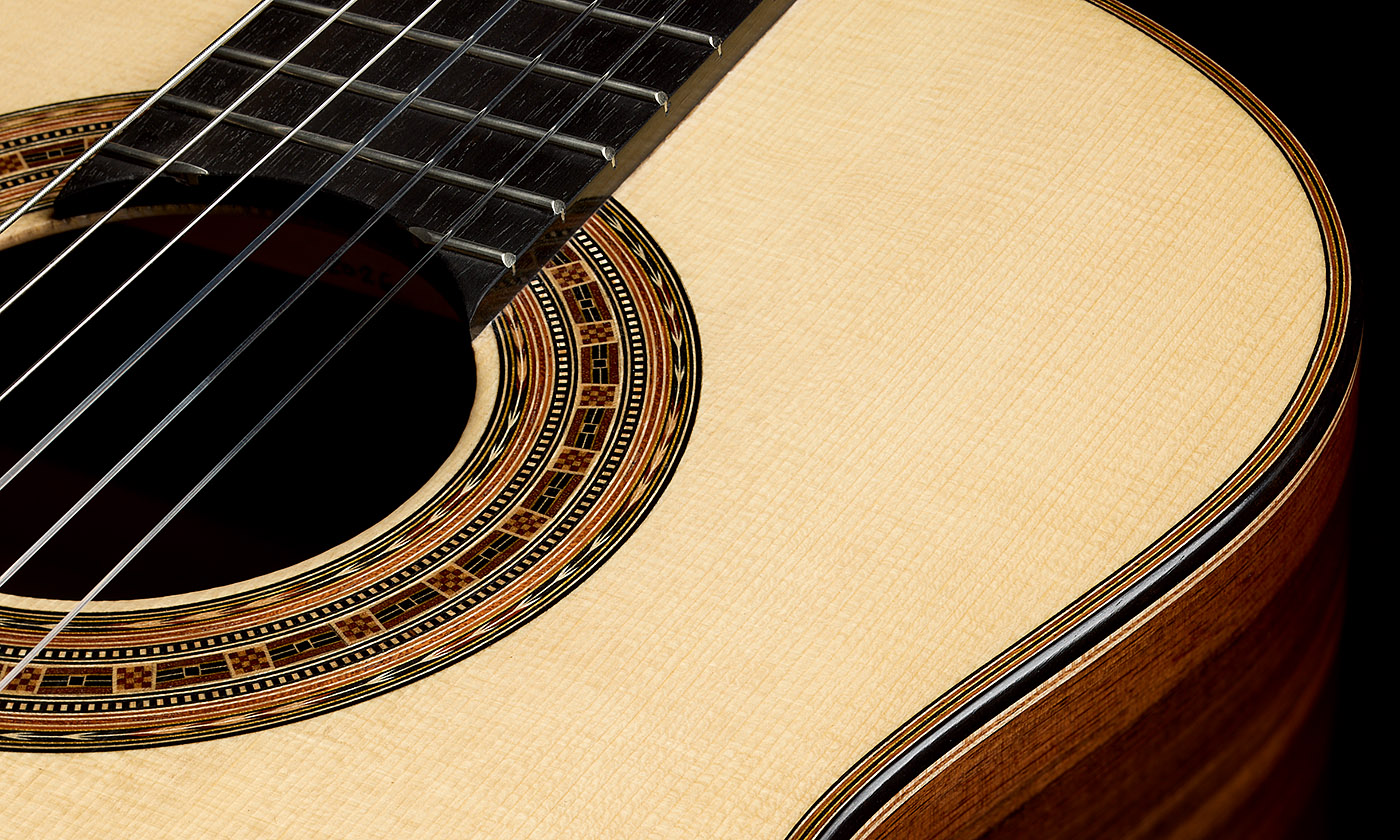
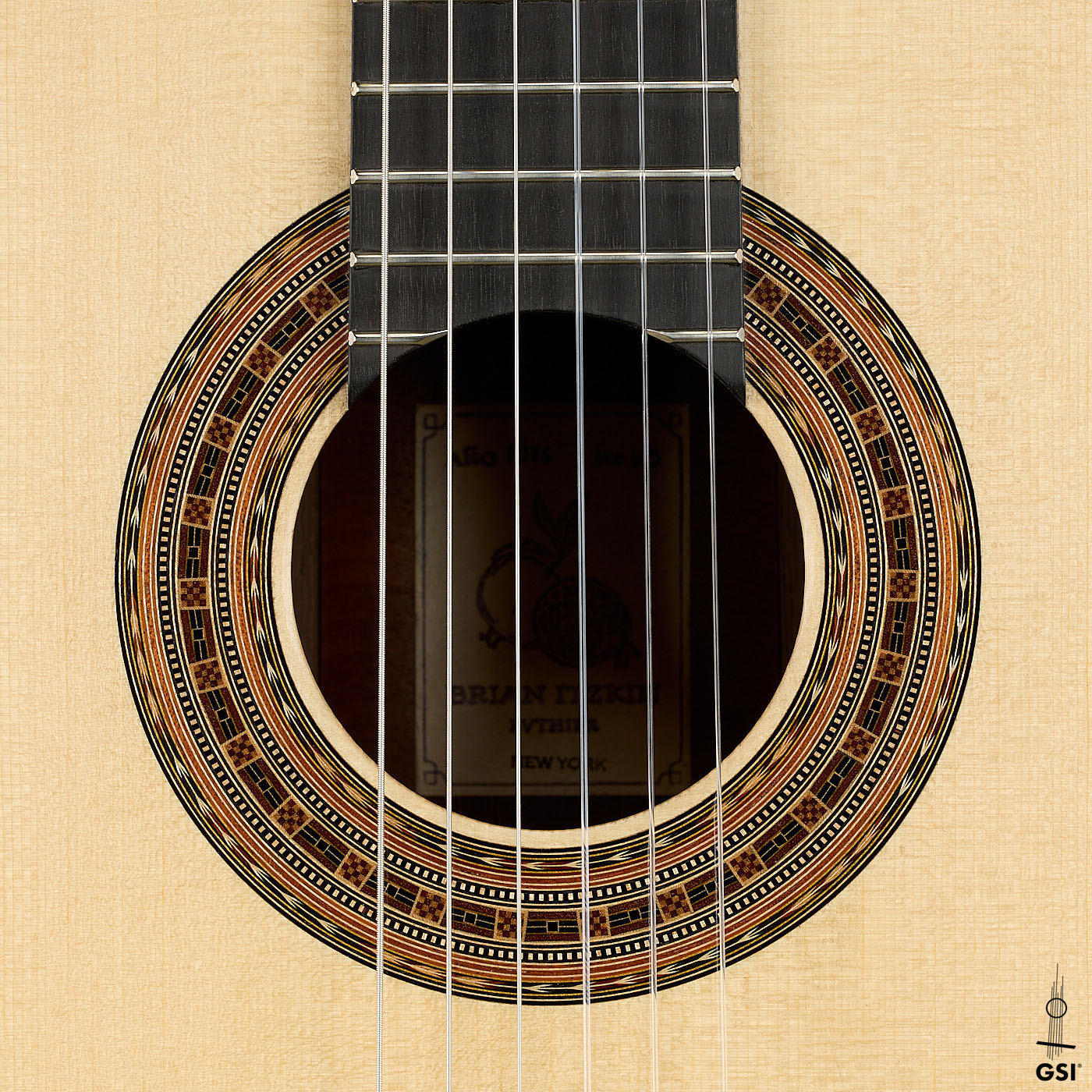
The construction follows a traditional fan bracing system with a bridge plate, strongly influenced by the work of José Luis Romanillos and similar in concept to the previous Itzkin guitars we’ve offered. The rosette is especially beautiful, its central motif inspired by Antonio de Torres’ famous FE-17, although Brian has altered the colors to create his own interpretation.
A Bridge from Copenhagen
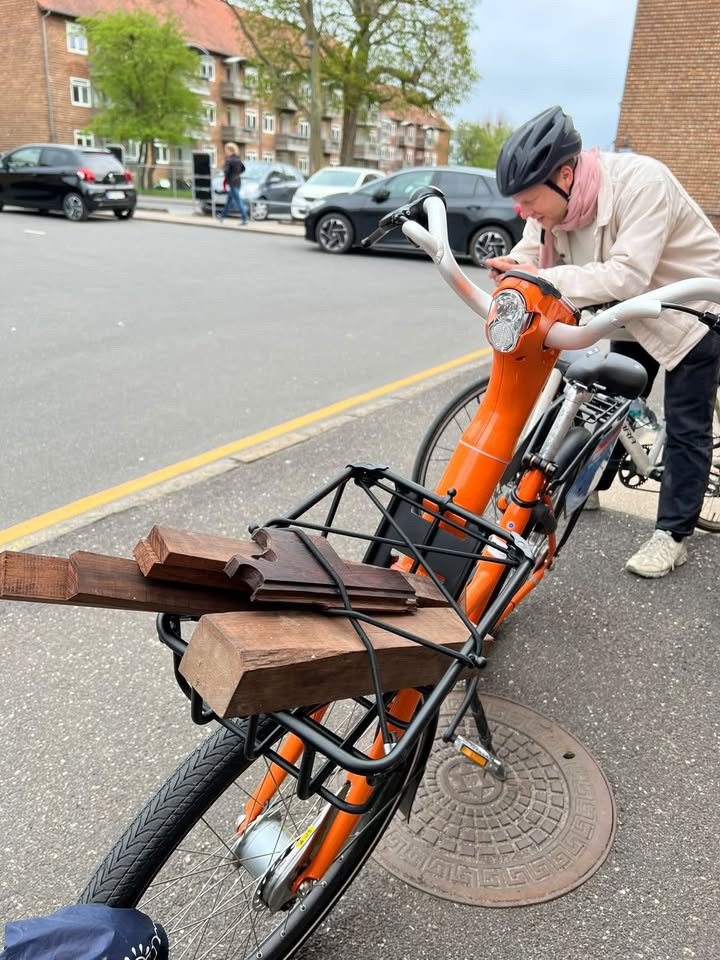
Henrik Ballowitz and the rosewood for the bridge, on its way through Copenhagen
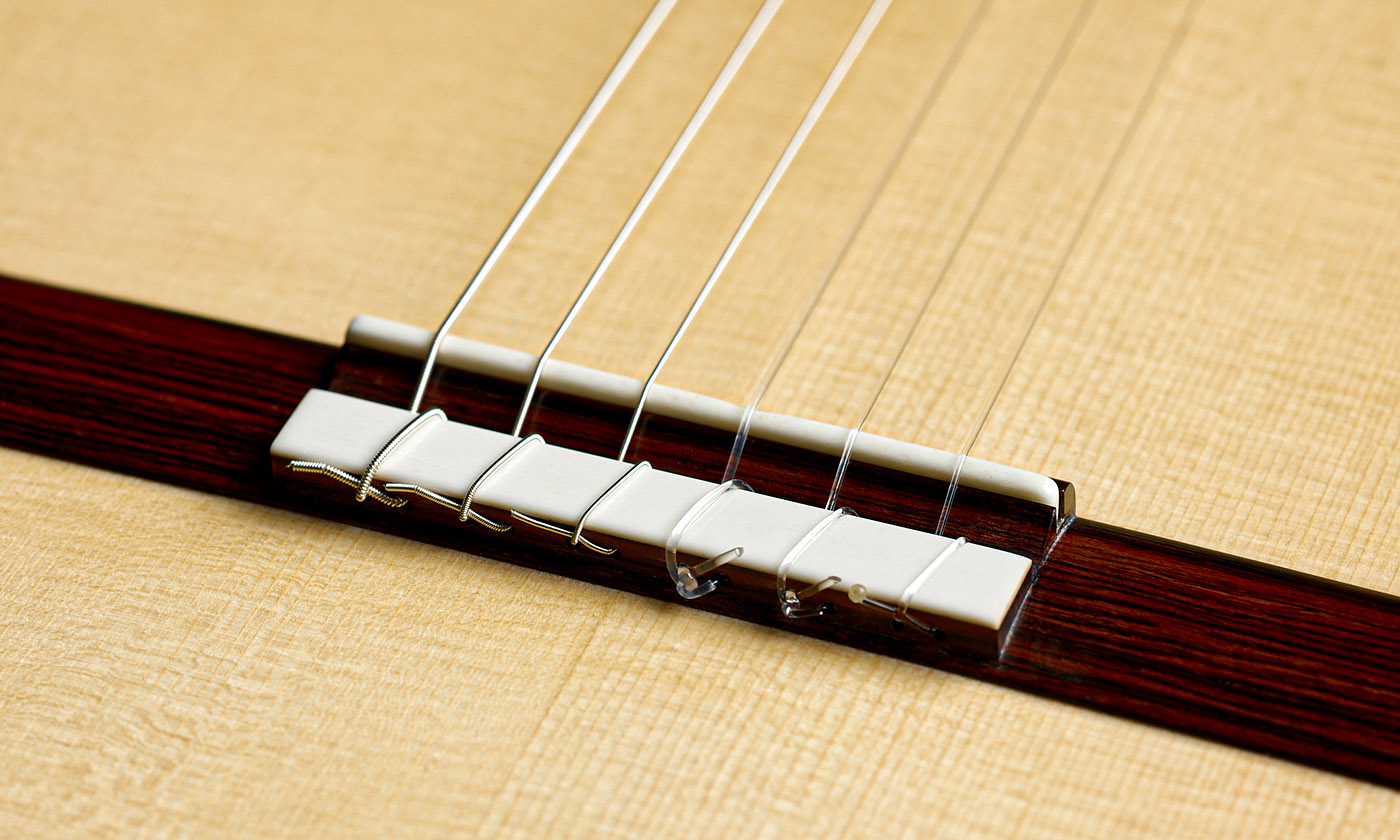
The bridge is made from CSA rosewood that Brian acquired from a cabinetmaker in Copenhagen while visiting fellow luthier Henrik Ballowitz. Apparently, he transported his newly acquired wood in the basket of his bicycle, a rather charming story that gives this particular detail of the guitar a personal history of its own! The instrument is finished in traditional French polish, with the meticulous craftsmanship and tasteful detailing that we’ve come to expect from Brian.
Sound
The sound is very much in keeping with the other Itzkin guitars we’ve had here at GSI, and that’s a very good thing indeed! There is a wonderfully dark, deep, old-world quality to the voice, with an abundance of harmonic richness that surrounds each note without ever obscuring the fundamental. The result is a sound that is at once lush and complex, yet remarkably clear and focused. Particularly interesting is the body resonance, even lower than that of the “635” model we recently offered, despite this instrument having a full-length scale. This low resonance contributes to the impression of great depth and richness, especially in the basses, while the trebles retain a lovely singing quality and clarity. There is a tremendous range of tonal color available to the player, with subtle changes in right-hand position and attack producing a seemingly endless variety of expressive possibilities. The guitar responds beautifully to the slightest nuances of touch, yet has plenty of power and dynamic range when called upon. It is that rare combination of intimacy, richness, clarity and responsiveness that makes these guitars such a joy to play.
Playability
Despite the depth and complexity of its voice, this is an exceptionally comfortable and manageable instrument. With its traditional full-length scale, standard nut width and pleasingly light weight, it feels wonderfully natural in the hands. The sound has an immediacy and openness that we associate with the finest traditional Spanish guitars, and although the instrument is brand new, it already possesses the kind of tonal maturity that one normally associates with a guitar that has been played for many years. We can only imagine how beautifully it will develop as it continues to open up with time.
A Bright Future
What is perhaps most remarkable about Brian’s work is how successfully he has translated his passion for the great historical Spanish makers into instruments that satisfy the needs of the modern concert guitarist. The power, the colors, the responsiveness, the balance and above all the sheer beauty of the sound are all here. There is a very special musical quality to these guitars, the proverbial “symphony in a box”, that makes them endlessly rewarding to explore. We are thrilled to be working with Brian and feel that his future as a maker is exceptionally bright. This is another outstanding example of his talent and a guitar that we’re very proud to offer.