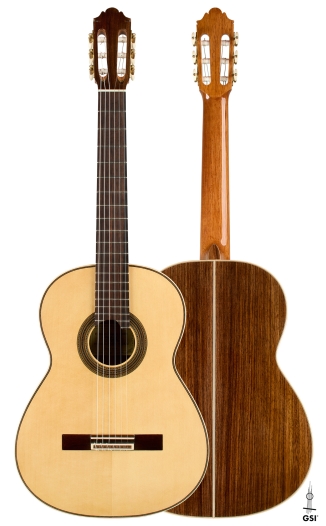
1886 Antonio de Torres "SE 92" w/pegs SP/CY
| Year | 1886 |
| Top | Spruce |
| Back & Sides | Cypress |
| Scale Length | 605 mm |
| Nut width | 50 mm |
| Finish | French Polish |
| Country | Spain |
| Luthier | Antonio de Torres |
This guitar is no longer available in our inventory. If it interests you, click the ”notify me when available” button to be notified in the event that we re-acquire this guitar for re-sale.


Alan Mearns performs Frederic Chopin's "Mazurka Op. 17, No. 4" on a 1886 Antonio de Torres guitar
Description

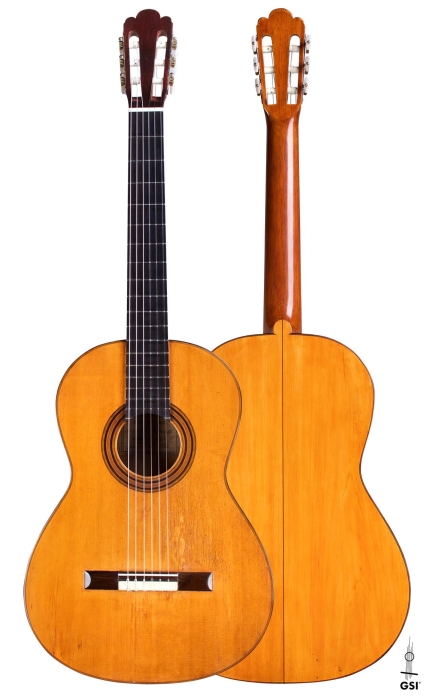
This 1886 Antonio de Torres is a small spruce and cypress guitar with wooden pegs, numbered SE 92 – a second-epoch Torres from Almería, once part of the Hosokawa collection in Japan.
In the video above, Alan Mearns plays Frédéric Chopin's Mazurka Op. 17, No. 4 on this guitar.
SE 92: A Small Torres with Pegs
Built during Torres' second epoch, this guitar is numbered SE 92 on the label by its maker – very faint, but still (barely) legible next to the printed "Calle Real, número 23 ... Segunda Época". A very small guitar in size and proportions, with wooden tuning pegs, it still boasts a huge, rich and simply gorgeous quality of sound.
Construction, as Described by Romanillos
José Romanillos lists SE 92 in his book on Torres and notes that it is similar to SE 117. The soundboard is made of three pieces of spruce, braced with five radial struts and two diagonal ones. The rosette is made of circles of dark and light strips, the fingerboard is ebony and the bridge rosewood, and the back and sides are two-piece cypress.
Sound and Playability
How rich and harmonious the sound is, how perfectly balanced the notes are as they blend, how the guitar feels as it vibrates against you – with every Torres we've seen, words still fall short. Here the trebles are velvety and multi-dimensional and respond to the slightest change in the right hand, for a wide palette of color and expression, and the basses are deep and sonorous, with great lyrical charm. Again, it is a smaller guitar, but it plays with great ease in the hands of any player, thanks in part to its startling responsiveness. Cypress makes it a versatile instrument too, as happy with classical repertoire as with flamenco.
Condition
The guitar has some repairs as well as refinishing work that was done several decades ago, likely in Japan when it was part of the Hosokawa collection, and to this day everything remains perfectly intact and currently in no need of any work.
More on Antonio de Torres
To learn more about the master of Seville and Almería, read our Antonio de Torres biography, The Torres Sound – an excerpt from José Luis Romanillos's book "Antonio de Torres" – and Pepe Romero on Torres, his interview with Kenny Hill. Also see Orfeo Magazine #9 – The 200th Anniversary of Antonio de Torres.
GSI Foundation
This guitar was donated to our non-profit charitable organization, the GSI Foundation. Guitar sales through the GSI Foundation raise money to directly benefit music education in public schools.