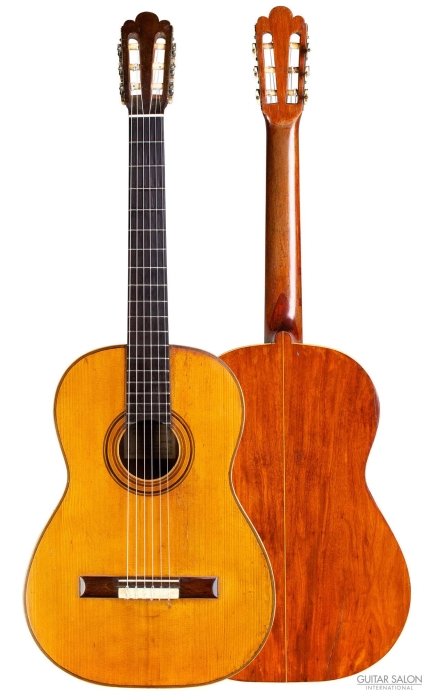
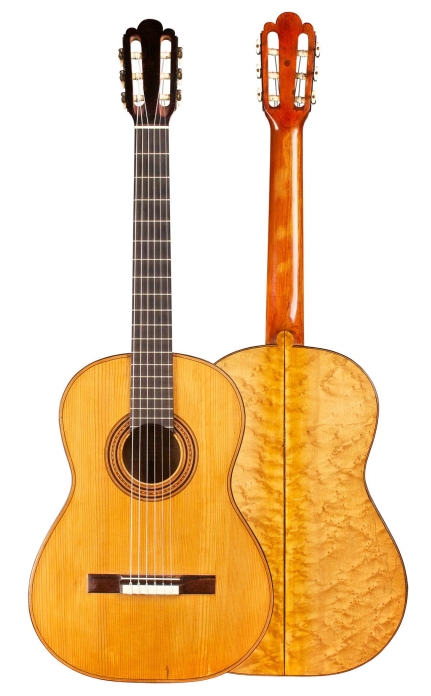
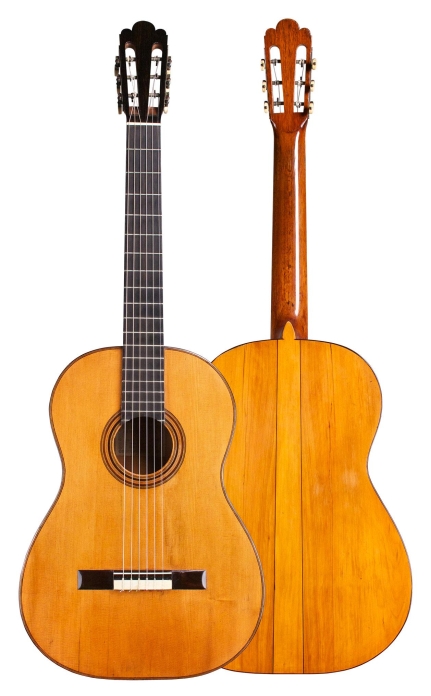
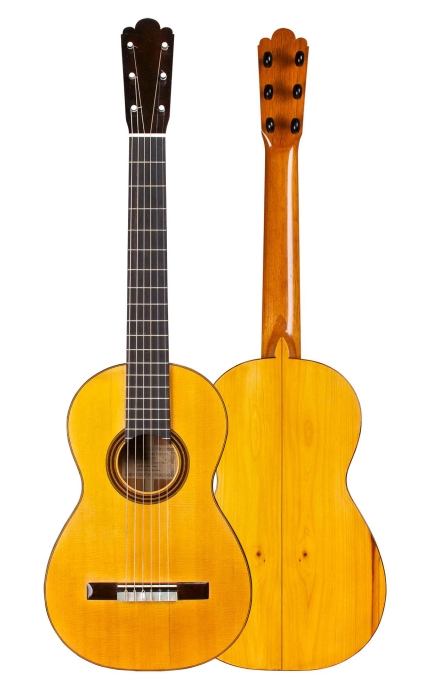
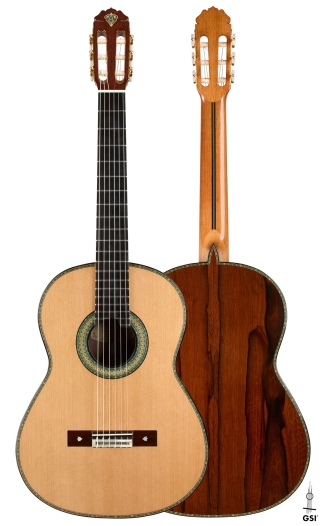
1878 Antonio de Torres "SE 14" SP/CY
| Year | 1878 |
| Top | Spruce |
| Back & Sides | Cypress |
| Scale Length | 650 mm |
| Nut width | 50 mm |
| Finish | French Polish |
| Country | Spain |
| Luthier | Antonio de Torres |
This guitar is no longer available in our inventory. If it interests you, click the ”notify me when available” button to be notified in the event that we re-acquire this guitar for re-sale.


First Look - 1878 Antonio de Torres (Second Epoch)

1878 Torres Demonstration: Pepe Romero plays Milan

1878 Torres Demonstration: Marc Teicholz plays Sor

1878 Torres Demonstration: Richard Brune discussion
Description

This 1878 Antonio de Torres is a spruce and cypress guitar from Almería, numbered SE 14 – one of the early guitars of his second epoch, restored by Yuris Zeltins.
In the videos above, GSI's Chris Garwood gives a first look at this guitar, and – in footage from Guitarrada II (2005) – Pepe Romero plays Luis Milán, Marc Teicholz plays Fernando Sor and Richard Bruné talks about it.
SE 14, Built in Almería in 1878
Built during Torres' second epoch, this guitar is numbered by its maker as No. 14 on the label – the version that reads "D. Antonio de Torres, constructor de guitarras en Sevilla, vive hoy en Almería, Calle Real, Nº 23", with "Guitarra núm. 14, 2.ª época" written in by hand. It is the work of a master returning to his craft, a few years after he took up guitar making again in Almería.
Sound
As is the case with every Torres we've seen, words continue to be inadequate when trying to describe the sound. The trebles have an intoxicating, "velvety" and multi-dimensional texture, and it is remarkable just how sensitive each note is to the slightest change in right-hand position – allowing for a wide variety of color and expressivity. The basses are wide and deep with a rich, sonorous bottom end, also with great lyrical charm and character. When evaluating the sound of a guitar like this, it's difficult to tell where the genius of Torres ends and the accumulated years of being played by great artists begins.
Restoration and Playability
Nearly 20 years ago Yuris Zeltins performed a fantastic repair job on the instrument, restoring it to concert-playing and recording condition. A guitar cannot be easier to play than this – it truly plays "like butter". It's almost as if the player simply thinks of the music, places a hand over the strings, and voilà – the music magically sings from the guitar.
A Torres for Classical and Flamenco
This is also a great example of a cypress instrument that is equally at home with classical repertoire and sound as with flamenco – very versatile in what it can do. It is truly a marvel and a further testament to the sublime acumen of its builder, the founding father of the modern classical and flamenco guitar.
Further Reading on Torres
For more on the life of Antonio de Torres, be sure to read his biography and this excerpt about the Torres sound from José Luis Romanillos's book "Antonio de Torres". We also have an interview between Pepe Romero and Kenny Hill about the master luthier. Also see Orfeo Magazine #9 – The 200th Anniversary of Antonio de Torres.