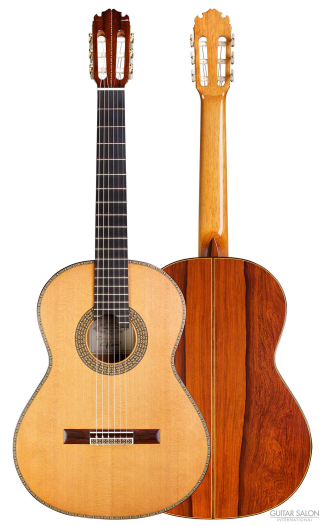
1890 Antonio de Torres "SE 139" PI/MP
| Year | 1890 |
| Top | Pine |
| Back & Sides | Maple |
| Scale Length | 650 mm |
| Nut width | 50 mm |
| Finish | French Polish |
| Country | Spain |
| Luthier | Antonio de Torres |
This guitar is no longer available in our inventory. If it interests you, click the ”notify me when available” button to be notified in the event that we re-acquire this guitar for re-sale.


Francisco Tárrega's "Adelita" performed by Taso Comanescu on an 1890 Antonio de Torres
Description

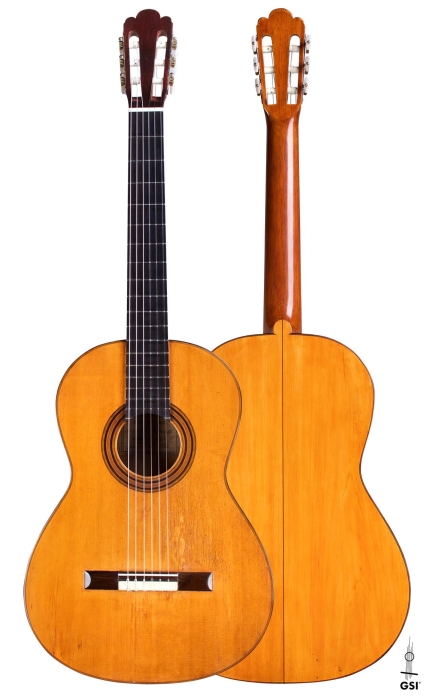
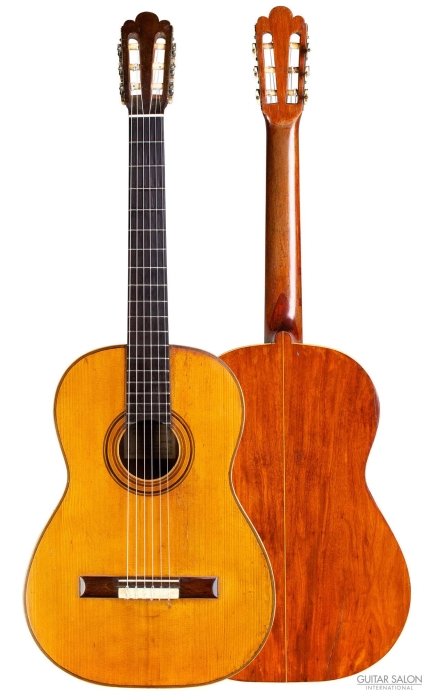
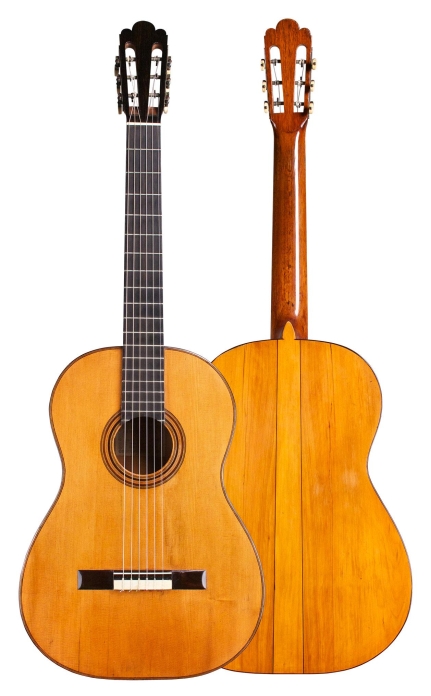
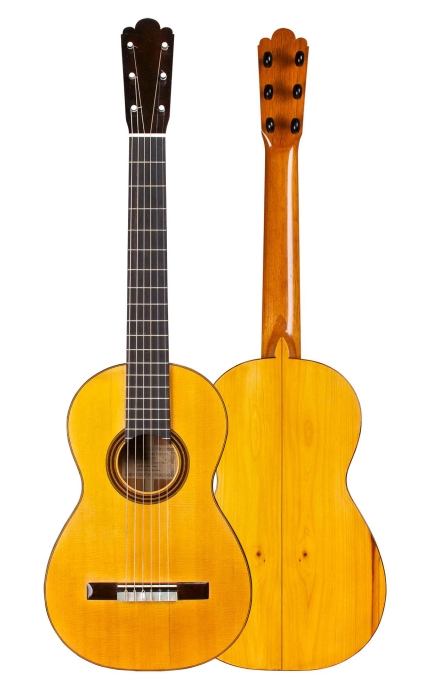
This 1890 Antonio de Torres is a classical guitar with a pine soundboard and bird's-eye maple back and sides, numbered SE 139 – a late second-epoch Torres from Almería, built two years before his death.
In the video above, Taso Comanescu plays Tárrega's "Adelita" on this guitar.
SE 139: Originally More Than Six Strings
This particular instrument is a fantastic example of an incredibly well-preserved bird's-eye maple guitar from 1890, numbered by the maker as No. 139 of the "Segunda Época" on its label. We believe the guitar was originally made for more than 6 strings (exactly how many we are no longer able to tell) and converted to a 6-string early in its life. The largest piece of evidence for this conversion is in the head itself, where there are traces of filled holes where wooden tuning pegs would originally have been fitted, and a previous attempt at cutting slots for machines that was redone.
A Torres with a Pine Top
Of notable interest, the soundboard is made entirely of pine. Torres was known to use pine for internal parts (the fans and lining, for example), but there are few known instruments with pine tops like this one. One other notable pine-top Torres (also with maple back and sides) is owned by Pepe Romero, who recorded an absolutely sublime album with it – guitar and piano duos of sonatas by Carulli and Diabelli.
Sound
The sound of SE 139 has the richness and harmonious quality found in other top examples from this incredible maker. Listening to it, one marvels at how beautiful the actual sound itself is, and at how the notes blend together and yet keep their clarity and separation. The sensation of playing it is unlike any other, as it vibrates against the player's body in a very deep way that is peculiar to Torres – a tremendous experience, confirmed by all who see and hear the Torres guitars (especially in this kind of very original condition) that come through our shop.
More on Antonio de Torres
Torres' life is told in our short biography, and José Luis Romanillos's book "Antonio de Torres" explains his sound in this excerpt. Pepe Romero shares his own experience of these guitars in an interview with Kenny Hill. Also see Orfeo Magazine #9 – The 200th Anniversary of Antonio de Torres.