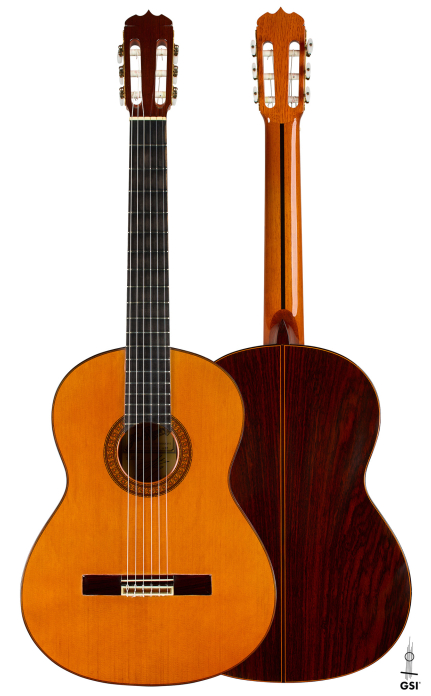
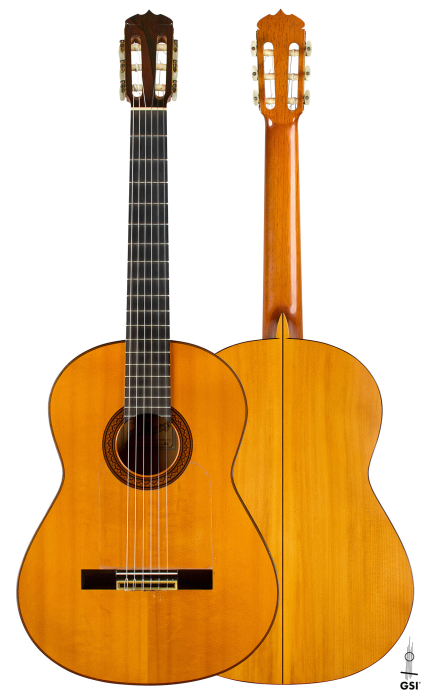
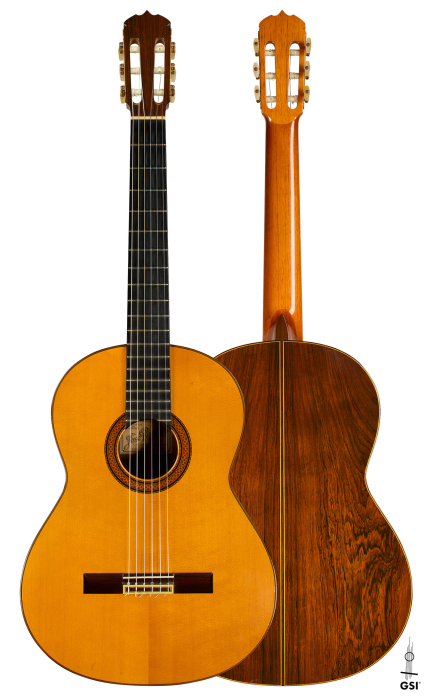
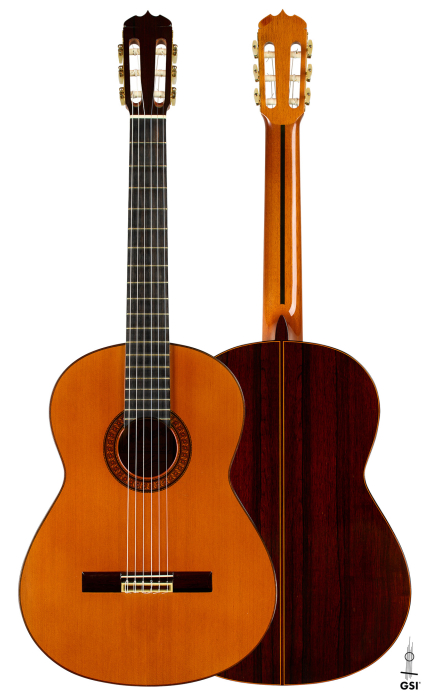
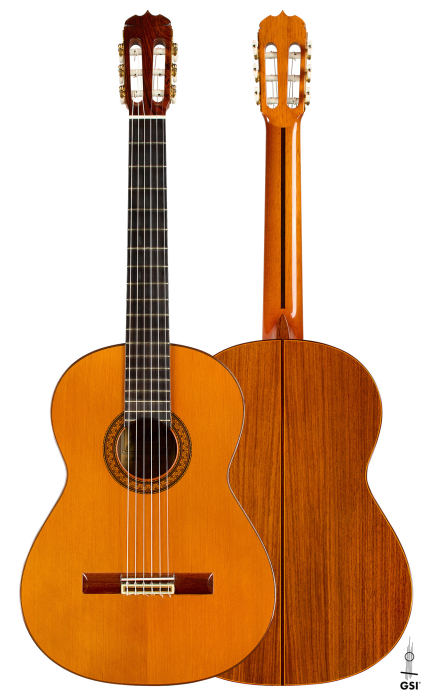
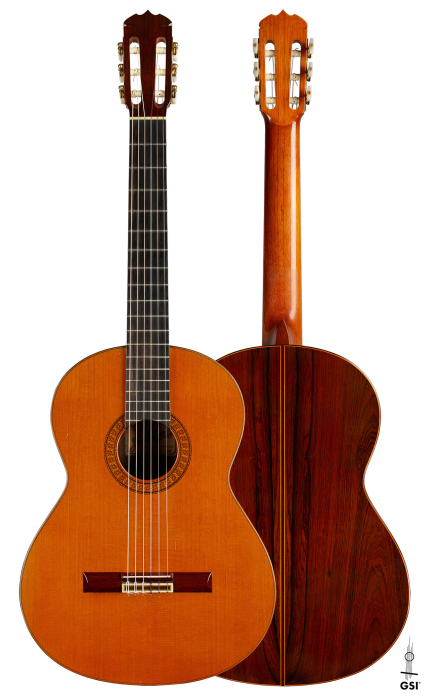
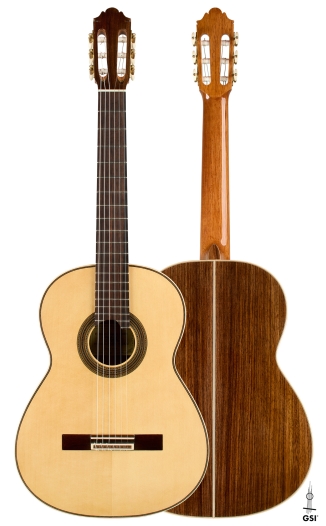
1969 José Ramírez "1a" No. 3578 CD/CSAR
| Year | 1969 |
| Top | Cedar |
| Back & Sides | CSA Rosewood |
| Scale Length | 664 mm |
| Nut width | 54 mm |
| Finish | Lacquer |
| Country | Spain |
| Luthier | José Ramírez III |
This guitar is no longer available in our inventory. If it interests you, click the ”notify me when available” button to be notified in the event that we re-acquire this guitar for re-sale.
Videos
Description
This 1969 José Ramírez "1a" No. 3578 is a cedar-top classical guitar with gorgeous CSA rosewood back and sides, built in Madrid by Arturo Sanzano; Megerdich Mikayelian plays Yupanqui's "Danza de la Paloma Enamorada" on it in the video above.

A 1969 Ramírez by Arturo Sanzano

Countless professionals have performed on instruments from the famous José Ramírez III workshop over the past half century and more – think of Sting and Segovia, Sabicas and Chet Atkins, or Lee Ritenour and Christopher Parkening. This guitar has the classic, identifiable Ramírez sound of the era: a rich, thick and yet clear voice from top to bottom, and the essential warm, mysterious and moody quality that made the workshop famous. Stamped initials internally are AS – Arturo Sanzano, who started working as an apprentice with José Ramírez III in 1963 and remained there until 1984 (see our list of Ramírez workshop luthiers).

Label and Condition
Signed by José Ramírez III, the label gives the number 3578 and the year 1969. It is in excellent playing condition thanks to a recent re-fret and set-up by German Vázquez Rubio here in Los Angeles, who also cleated two small cracks in the back and re-varnished it (and touched up the sides), restoring the original luster of the gorgeous CSA rosewood beneath. An absolutely fantastic example of a top Ramírez from their golden era, made with gorgeous materials.
More reading on our blog: The Ramírez Family: Masters of the Guitar, The José Ramírez Dynasty (from Amalia back to José I) and some interesting fact-checking in José Ramírez: myths and facts.
Background
The José Ramírez Workshop of Madrid
Founded in Madrid in 1882 by José Ramírez I, the Ramírez workshop has produced guitars for more than a century and through five generations of the family. José Ramírez III (1922–1995) took over as maestro in 1957 and developed the Ramírez concert guitar we know today – large in body, with a long string length and a cedar or spruce top, with great power, sustain, sweetness and balance across the entire register. He popularized western red cedar as a soundboard wood, and from the 1960s Andrés Segovia played José Ramírez guitars to the end of his days.
Ramírez Craftsmen and the Next Generations
From the 1960s to the 1990s the workshop trained many of the most talented guitarreros of the day, among them Paulino Bernabé and Manuel Contreras. In 1995 the shop moved from Calle Concepción Jerónima 2 to Calle de la Paz 8, and since the death of José Ramírez IV in June 2000 the business has been directed by his sister, Amalia Ramírez, who inspects every guitar during and after construction.
Ramírez Models, Labels and Builders' Stamps
For decades the workshop sold its guitars by class rather than by model name. The "1a" (first class) was the standard concert guitar; the "2a" (second class) was built the same way, and the shop explained its lower price tag by materials that might have minor aesthetic blemishes, or by its having been built by an apprentice rather than a foreman. Flamenco guitars add an "F" – "1aF" and "2aF". Until 1967 the labels carried only the year; from 1967 they were signed by José Ramírez III and gave the guitar's number and class, and from 1973 the 2a had a grey label of its own, with a red border and "R" numbers. Until 1971, many Ramírez guitars were stamped inside with the initials of the craftsman who built them – AM for Antonio Martínez, MT for Mariano Tezanos, PB for Paulino Bernabé and many more (see our list of Ramírez workshop luthiers). Later decades brought new models: the "Centenario", which roughly marked the workshop's hundredth anniversary; the "Da Cámara"; the shorter-scale C86 of 1986; and, under José Ramírez IV, the "Tradicional" and the "Especial".