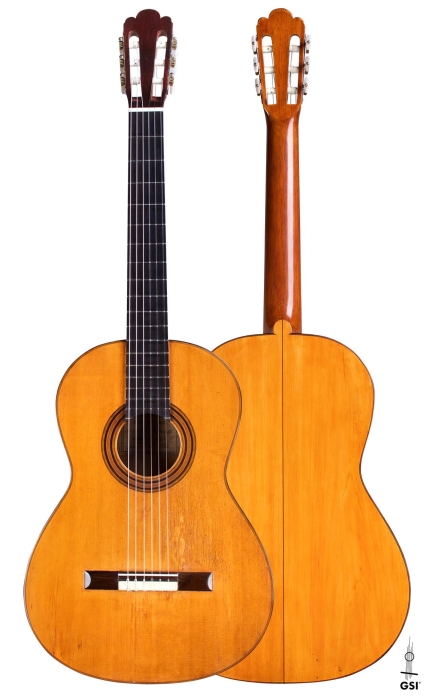
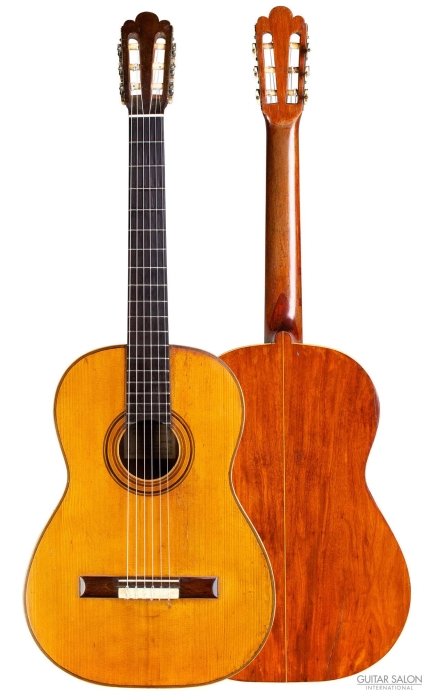
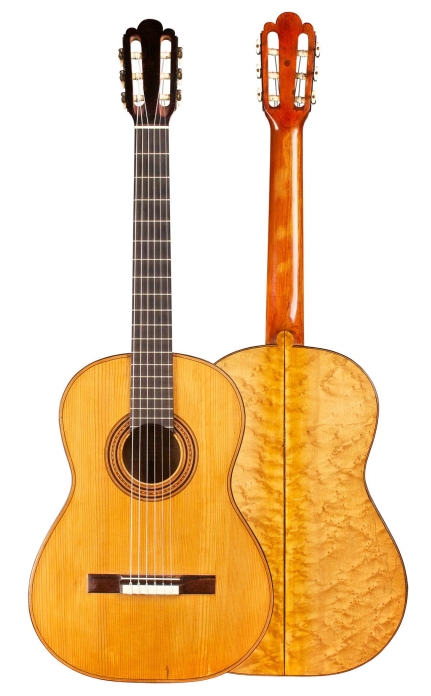
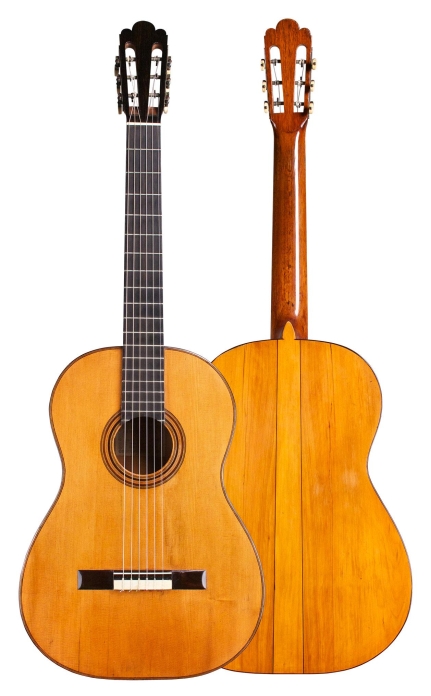
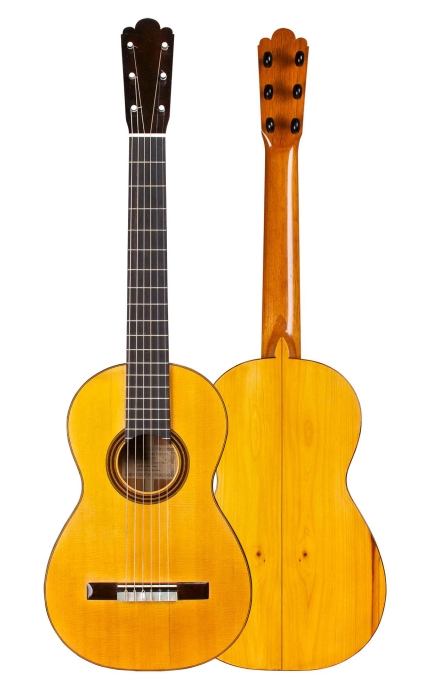
1864 Antonio de Torres "FE 21A" SP/CSAR
| Year | 1864 |
| Top | Spruce |
| Back & Sides | CSA Rosewood |
| Scale Length | 646 mm |
| Nut width | 50.5 mm |
| Finish | French Polish |
| Country | Spain |
| Luthier | Antonio de Torres |
This guitar is no longer available in our inventory. If it interests you, click the ”notify me when available” button to be notified in the event that we re-acquire this guitar for re-sale.


Angel Barrios' "Tonadilla" played by Andrew Lee on a 1864 Antonio de Torres

Andrew York performs "I. Numen" from his "Numen Suite" on an 1864 Antonio de Torres

Andrew York performs "II. Lumen" from his "Numen Suite" on an 1864 Antonio de Torres

Andrew York performs "III. Menhir" from his "Numen Suite" on an 1864 Antonio de Torres

Andrew York performs "IV. Numina" from his "Numen Suite" on an 1864 Antonio de Torres

Tarrega's "Lagrima" played by Irina Kulikova on an 1864 Antonio de Torres

Johannes Moller performs "Eternal Dream" on an 1864 Torres
Description

This 1864 Antonio de Torres is a spruce and CSA rosewood classical guitar from Seville, FE 21A in the Romanillos catalog – a first-epoch Torres that stayed with one Almería family until 1993 and has had only two owners.
In the videos above, Andrew York plays the four movements of his "Numen Suite", Andrew Lee plays Ángel Barrios' "Tonadilla", Irina Kulikova plays Tárrega's "Lágrima" and Johannes Möller plays his "Eternal Dream" on this guitar.
FE 21A: Built the Same Year as Tárrega's FE 17
This guitar was built during what could arguably be called a high point in the artistic and creative output of Antonio de Torres. Indeed it was built the same year as Tárrega's cherished FE 17, which Emilio Pujol described as the greatest guitar he had ever heard. Well, we wonder what Pujol would have thought had he also known this guitar, identified by José Romanillos as FE 21A and built during the so-called "first epoch", when Torres was still working in Seville at Calle de la Cerrajería 32.
Only Two Owners in 150 Years
Although the guitar was built more than 150 years ago, it has had only two owners. The original family (from Almería, Spain), who acquired it in 1864, sold it in 1993 with the help of José Romanillos to the great Japanese guitarist Matsuda Akinobu, who is well known in Japan for performing on historical instruments like this. It is a great example of an instrument that rarely ever becomes available, making it a great privilege for us to have, especially since it is such a well-preserved, fantastic-sounding masterpiece by one of the greatest guitar making geniuses of history.
A Full-Size Torres in Excellent Condition
The guitar is a marvelous and extremely rarefied example of Torres' most representative work from this period. This is a full-sized Torres, nearly "modern" by today's standards in terms of measurements and proportions which, incredibly, remain the blueprint for all guitar makers ever since, with little to no modification from this basic design. Condition is excellent, particularly given its age. Only a handful of nearly invisible cracks (none in the back, 2 in the top and a few in the sides) have been expertly and conservatively repaired, maintaining the original integrity of the instrument beautifully, so the guitar is in top, performance-ready condition.
Sound and Rosette
Sound is absolutely majestic. It has a huge voice with a velvety texture, rich in overtones yet retaining great clarity at the core of every note. Torres of course had great style and a keen eye for design – it is as beautiful in appearance as in sound, with a 4-piece CSA rosewood back and a classic ringed rosette with a central herringbone motif and "block" purflings, which has since become one of the most copied rosettes in successive generations of guitar making. This is a breathtaking example of a well-preserved, elegantly built and simply gorgeous Torres, highly desirable to the most discriminating collector or performer alike.
More on Antonio de Torres
To learn more about the master of Seville and Almería, read our Antonio de Torres biography, The Torres Sound – an excerpt from José Luis Romanillos's book "Antonio de Torres" – and Pepe Romero on Torres, his interview with Kenny Hill. Also see Orfeo Magazine #9 – The 200th Anniversary of Antonio de Torres.