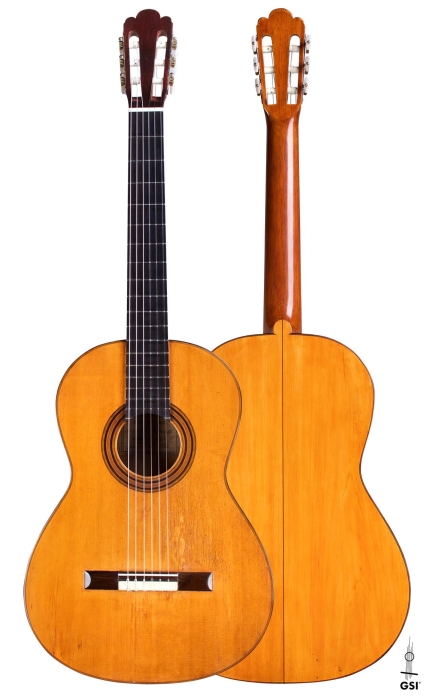
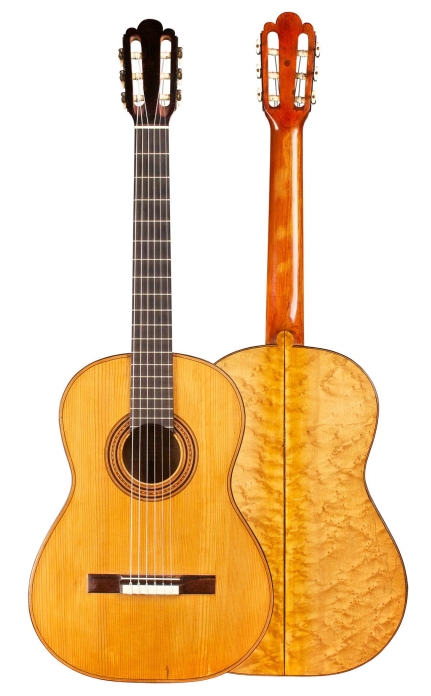
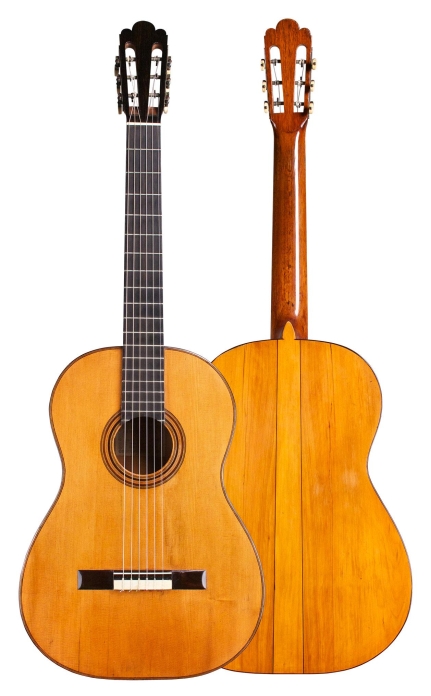
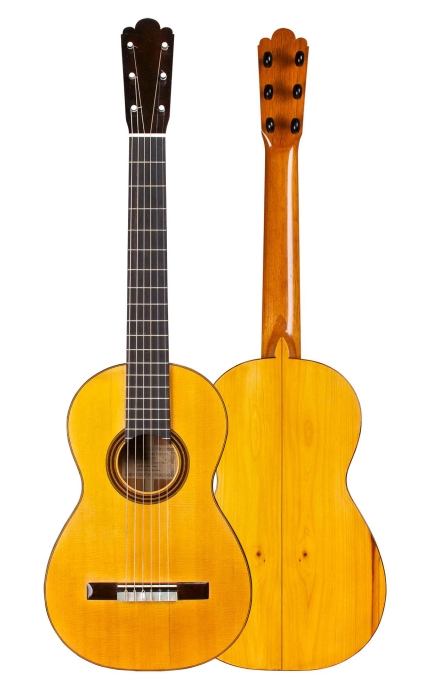
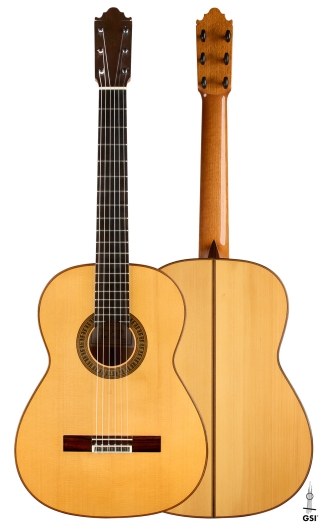
1888 Antonio de Torres "SE 115" SP/MH (ex Matilde Cuervas, Emilio Pujol)
| Year | 1888 |
| Top | Spruce |
| Back & Sides | Mahogany |
| Scale Length | 650 mm |
| Nut width | 52 mm |
| Finish | French Polish |
| Country | Spain |
| Luthier | Antonio de Torres |
This guitar is no longer available in our inventory. If it interests you, click the ”notify me when available” button to be notified in the event that we re-acquire this guitar for re-sale.


Andrew York plays "Home" on an 1888 Antonio de Torres (SE 115, ex Emilio Pujol)

Llobet (arr.) "Canco del Lladre" played by Tavi Jinariu on an 1888 Antonio de Torres (ex Pujol)

Emilio Pujol and Matilde Cuervas play the Danza from "La vida breve" by Manuel de Falla
Description

This 1888 Antonio de Torres, SE 115, is a spruce and mahogany classical guitar from Almería, played in concert by Matilde Cuervas and then by her husband, Emilio Pujol – all original down to its wooden case, from the Russell Cleveland collection.
In the videos above, Andrew York plays his "Home" and Tavi Jinariu plays Llobet's arrangement of "Cançó del Lladre" on this guitar. The third video is a recording made c. 1932 by Emilio Pujol and Matilde Cuervas of the Danza from Manuel de Falla's "La vida breve" – possibly on this Torres.
SE 115: Built the Same Year as Tárrega's SE 114
Built the same year as Tárrega's favorite Torres guitar (SE 114) and almost identical in dimensions and materials, this guitar – No. 115 of the "Segunda Época", as its label reads – is one of the great masterpieces of Torres' output for its provenance, quality of sound, condition and historical importance. It is in phenomenal condition with all original elements preserved, including original polish, tuning machines (Baker), internal pencil marks and even the original wooden hardshell case! Yuris Zeltins did some repair work to re-repair some old cracks, but left all original materials (including the finish) intact.
Matilde Cuervas and Emilio Pujol
The guitar was once owned by the concert artist Matilde Cuervas (1888–1956), who used it professionally throughout her career. After her death, it was inherited by her husband and duo partner, the great pedagogue, composer and concert artist Emilio Pujol (1886–1980), who continued to use it professionally as well. Before his passing, he gave the guitar to Matilde's niece, María Teresa Guerra Cuervas, and in 1997 it was sold to Russell Cleveland. Her handwritten letter of December 1997, confirming the guitar's history, is shown in the photo gallery.
Sound
The trebles have an intoxicating, "velvety" texture, and it is remarkable just how sensitive each note is to the slightest change in right-hand position – allowing for a wide variety of color and expressivity. The basses are wide and deep, also with great lyrical charm and character, and the notes blend in perfect balance, with that sensation of the guitar vibrating against the player's body that defies description. When evaluating the sound of a guitar like this, it's difficult to tell where the genius of Torres ends and the accumulated years of being played by great artists begins. This instrument is truly a marvel of guitar making history.
More on Antonio de Torres
There is much more to read about Torres: our biography of the maker, an excerpt on the Torres sound from José Luis Romanillos's book "Antonio de Torres", and a conversation between Pepe Romero and Kenny Hill about the master luthier. Also see Orfeo Magazine #9 – The 200th Anniversary of Antonio de Torres.
From the Russell Cleveland Collection
This guitar comes from the Russell Cleveland collection.