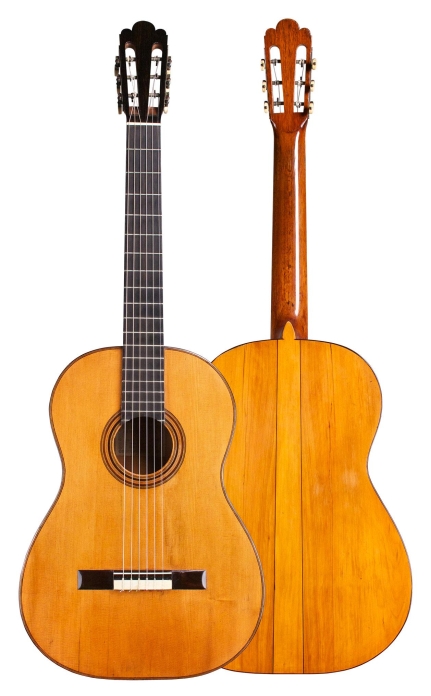
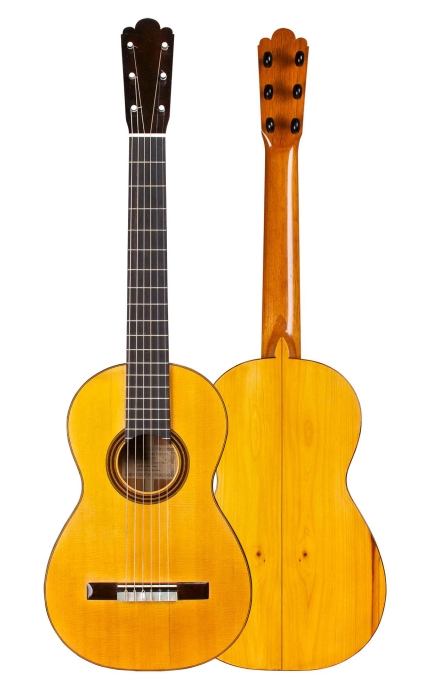
1888 Antonio de Torres "SE 114" SP/CSAR (ex Francisco Tárrega)
| Year | 1888 |
| Top | Spruce |
| Back & Sides | CSA Rosewood |
| Scale Length | 650 mm |
| Nut width | 50 mm |
| Finish | French Polish |
| Country | Spain |
| Luthier | Antonio de Torres |
This guitar is no longer available in our inventory. If it interests you, click the ”notify me when available” button to be notified in the event that we re-acquire this guitar for re-sale.


Jacob Kellermann plays "Andante Sostenuto" by F. Mendelssohn on 1888 Antonio de Torres (ex Tarrega)

Francisco Tárrega's "Capricho Árabe" by Pepe Romero on an 1888 Antonio de Torres (ex F. Tárrega)

Andrew York plays his piece "Dancing With Maya" on an 1888 Antonio de Torres “SE 114” (ex Tárrega)

Manuel de Falla's "Canción del Fuego Fatuo" by LAGQ on 4 Antonio de Torres (incl. all 3 ex. Tárrega)

Francisco Tárrega's "Oremus" performed by Matthew Greif on an 1888 Antonio de Torres (ex F. Tárrega)

Francisco Tárrega's "Sueño" played by Bill Kanengiser on an 1888 Antonio de Torres (ex F. Tárrega)

Andrew York plays his composition "Poem No. 6" on an 1888 Antonio de Torres “SE 114” (ex Tárrega)

Francisco Tárrega's "Lágrima" performed by Pepe Romero on an 1888 Antonio de Torres (ex F. Tárrega)

Georges Bizet's "Habanera" played by the LAGQ on 4 Antonio de Torres (including all 3 ex. Tárrega)

Andrew York plays his composition "Annie's Song" on an 1888 Antonio de Torres “SE 114” (ex Tárrega)

Frederic Hand's "Chorale" played by the LAGQ on 4 Antonio de Torres (including all 3 ex. Tárrega)
Description

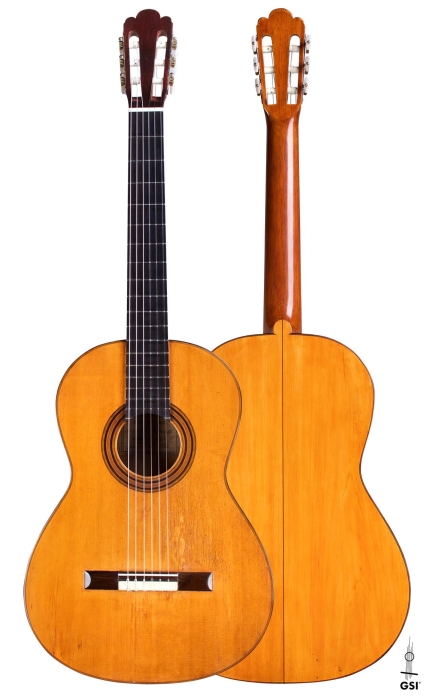
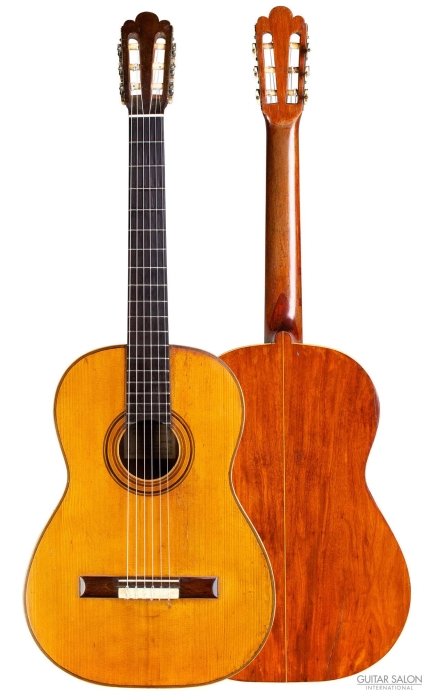
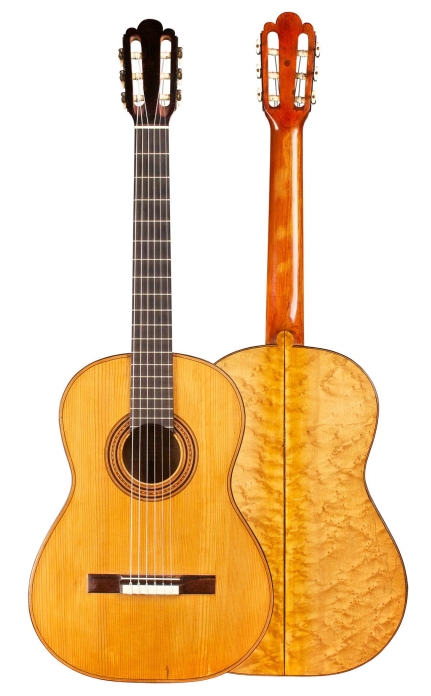
This 1888 Antonio de Torres "SE 114" is a spruce and CSA rosewood classical guitar from Almería – the last of Francisco Tárrega's three Torres guitars, loaned to GSI by Sheldon Urlik and reunited here with the other two.
In the videos above, Pepe Romero plays Tárrega's "Capricho Árabe" and "Lágrima", Matthew Greif plays "Oremus", Bill Kanengiser plays "Sueño", Andrew York plays "Dancing With Maya", "Poem No. 6" and "Annie's Song", and Jacob Kellermann plays Mendelssohn's "Andante Sostenuto" on this guitar. The LAGQ also plays it in three quartets recorded on four Torres guitars, including all three ex Tárrega.
Built for Francisco Tárrega
This instrument, built in 1888 and numbered 114 in Torres' "Segunda Época" – the number is written by hand on its label – was built for the great Francisco Tárrega and was the 3rd of 3 Torres guitars that Tárrega would own in his lifetime. After Tárrega's death in 1909, "SE 114" would be the second of the 3 Torres to be sold by his family, in 1920, when it was purchased by José de Jesús González for his daughter, Margarita González García, in Cuba. 45 years later, the guitar was sold to the Cuban guitarist Elías Barreiro, who would keep it in his possession until 2000, when it was sold to its current owner, Sheldon Urlik, who generously loaned the guitar to GSI so it could be reunited with the other two Torres guitars of Tárrega, after over 100 years of separation!
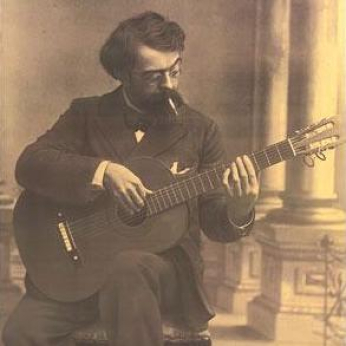
The Famous Photograph of Tárrega
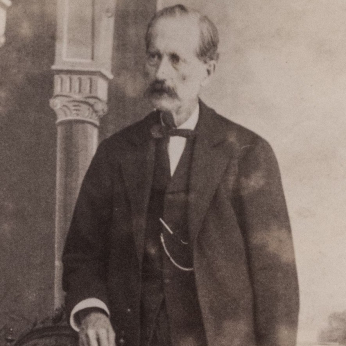
This guitar has been famously captured in a historic photograph (now available as a poster by SONETO) and will be very familiar to many guitar aficionados who have it adorning the walls of their homes, studies or workplaces.
Restoration by Jeffrey Elliott
The instrument is in excellent playing condition, the most recent restoration work carried out by luthier Jeffrey Elliott, who completed the work in 2002, documenting it both in writing and in published plans for the Guild of American Luthiers. His repairs were intended to stabilize and preserve the instrument without altering any of the original elements intended by Torres. We were delighted in particular with its ease of play for both hands and how, with minimal effort, the player can draw out the deep basses, sparkling trebles and singing mids that make this such a spectacular instrument – indeed, by the time of Tárrega's passing, this was known to be his favorite guitar.
Sound
As with all great Torres, words are simply inadequate in describing just how rich and harmonious the sound is – whether in the beauty of single pitches in a melodic phrase or in the blended fusion of notes in counterpoint or chordal harmony. And there is also the other-worldly sensation of playing the guitar as it vibrates against the player's body – a tremendous experience which is only possible with an instrument such as this in one's bosom. We were all amazed to have it in our showroom here at GSI for the purpose of demonstrating, filming and showcasing it, hoping to do justice to its legacy as one of the foundational instruments in the history of the classical guitar.
Again, special thanks to Sheldon Urlik for loaning it to us, and also to Federico Sheppard for generously taking the time to transport it to our showroom in Santa Monica.
More on Antonio de Torres
Torres' life is told in our short biography, and José Luis Romanillos's book "Antonio de Torres" explains his sound in this excerpt. Pepe Romero shares his own experience of these guitars in an interview with Kenny Hill. Also see Orfeo Magazine #9 – The 200th Anniversary of Antonio de Torres.
Background