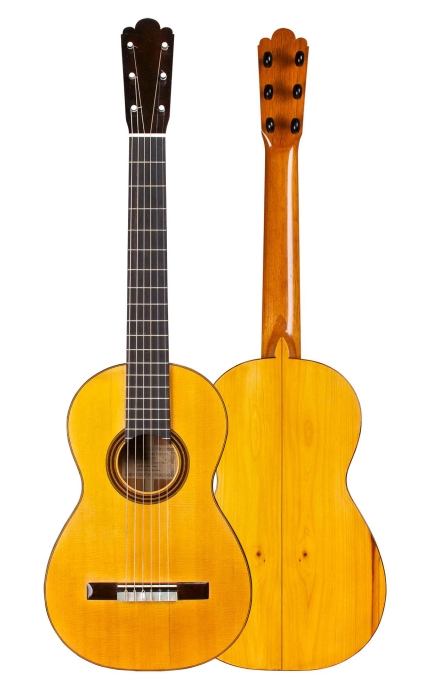
1868 Antonio de Torres SP/CSAR
| Year | 1868 |
| Top | Spruce |
| Back & Sides | CSA Rosewood |
| Scale Length | 650 mm |
| Nut width | 50 mm |
| Finish | French Polish |
| Country | Spain |
| Luthier | Antonio de Torres |
This guitar is no longer available in our inventory. If it interests you, click the ”notify me when available” button to be notified in the event that we re-acquire this guitar for re-sale.


First Look -1868 Antonio de Torres (First Epoch)

Evan Hirschelman - 1868 Torres with Tornavoz

Evan Hirschelman plays "Shapeshifting (Movement 1)" on an 1868 Torres
Description

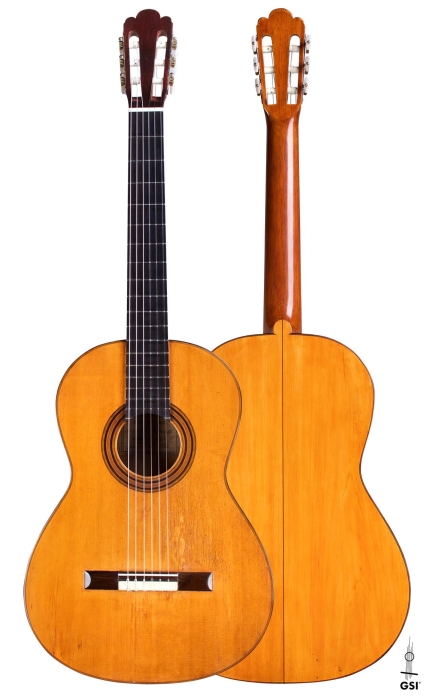
This 1868 Antonio de Torres is a spruce and CSA rosewood classical guitar from Seville, built at the very end of his first epoch – a full-size Torres with a tornavoz, which comes with its original Jerome tuners and an old wooden case.
In the videos above, GSI's Chris Garwood gives a first look at this guitar, and Evan Hirschelman plays it, including the first movement of his "Shapeshifting".
A Late First-Epoch Torres from Seville
Built at the very end of the so-called "first epoch", while Torres was still working in Seville – its label reads "Calle de la Cerrajería número 32, año de 1868" – this is a marvelous and extremely rarefied example of Torres' most representative work from the period. It is a full-sized instrument, completely "modern" by today's standards in terms of measurements and proportions which, incredibly, remain the blueprint for all guitar makers ever since, with little to no modification from this basic design.
A Majestic Sound and the Tornavoz
Sound is absolutely majestic. It has a huge voice with a velvety texture, rich in overtones yet retaining great clarity at the core of every note. The body resonance is very deep, partly due to a device Torres used with some regularity, especially in the first epoch (most famously in such guitars as "La Leona", FE 08, FE 13 ex Llobet and FE 17 ex Tárrega): the "tornavoz", a conical tube attached to the soundhole, which here adds a sonic boom to the bottom end and gives the trebles a brilliant, sparkling clarity.
Rosette, Purfling and Condition
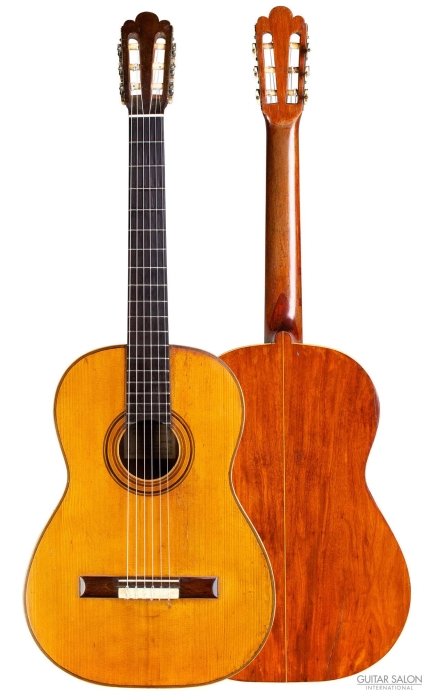
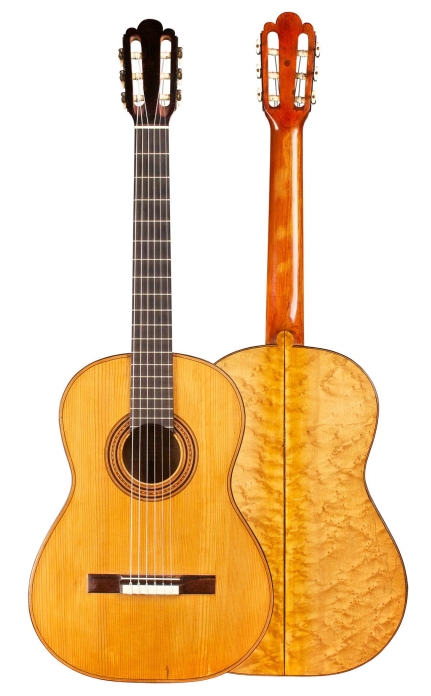
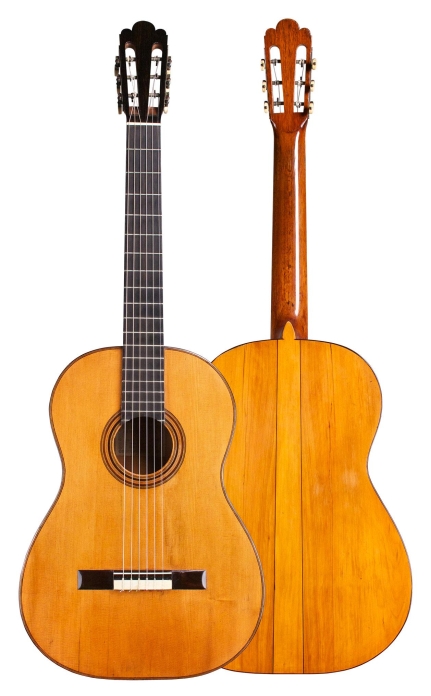
The instrument is as beautiful in appearance as in sound. It has a 3-piece CSA rosewood back, a ringed rosette with a central herringbone motif and matching "thick" purfling on both the back and sides. The tuning machines were replaced with a custom set made by Rodgers of England for functionality; however, the original Jerome tuning machines, as well as a very old (likely original) wooden case, remain with the guitar. Condition is excellent, particularly given that it was built over 150 years ago: all repairs were expertly done and the guitar is in performance-ready condition. Another breathtaking example of a well-preserved, elegantly built and simply gorgeous Torres, highly desirable to the most discriminating collector or performer alike.
More on Antonio de Torres
There is much more to read about Torres: our biography of the maker, an excerpt on the Torres sound from José Luis Romanillos's book "Antonio de Torres", and a conversation between Pepe Romero and Kenny Hill about the master luthier. Also see Orfeo Magazine #9 – The 200th Anniversary of Antonio de Torres.